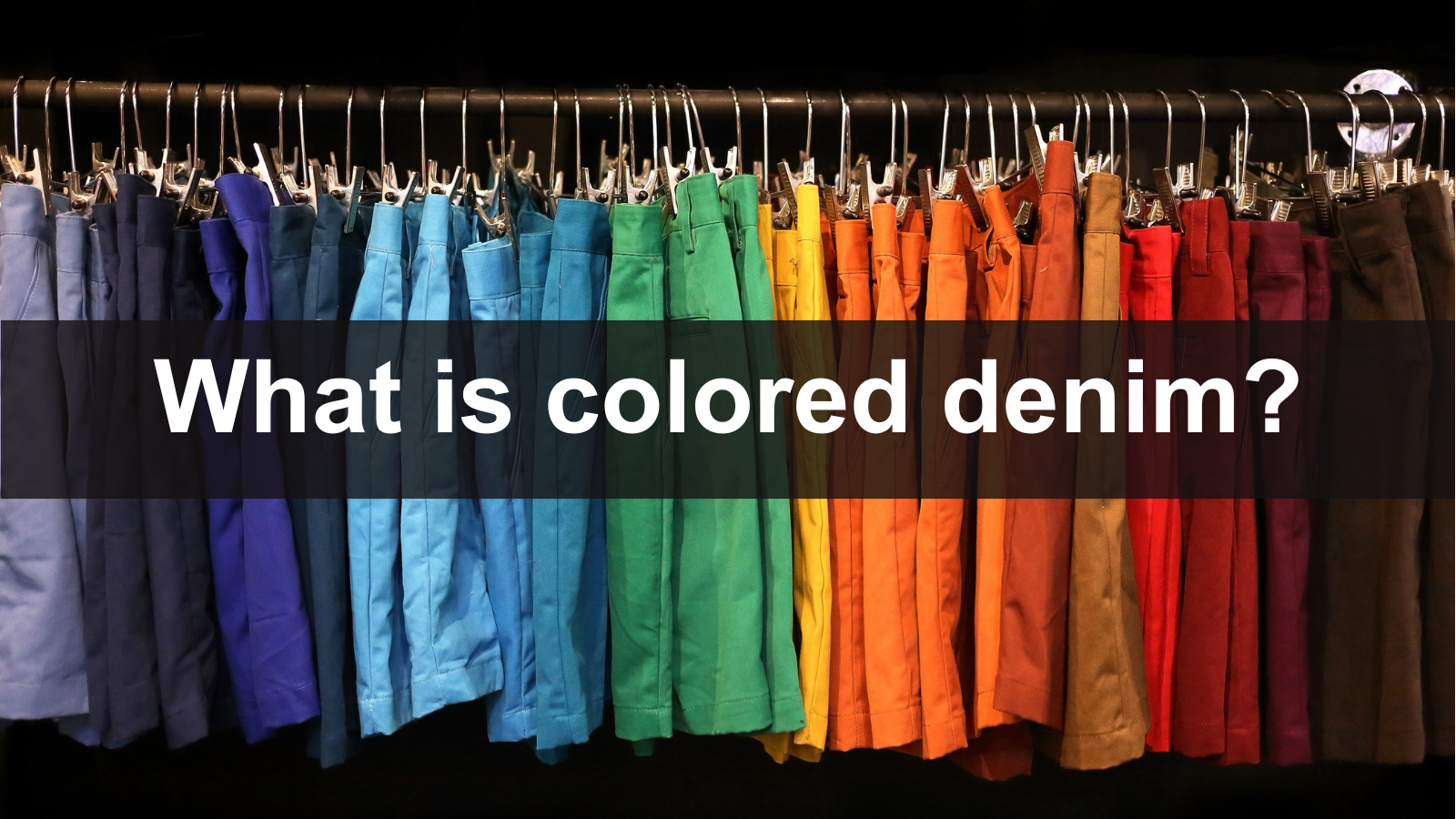

The Birth of Jeans
denim-love
Denim in everyday life


There are the words “denim” and “jeans.”
People often ask what the difference is between denim and jeans, but here’s the difference between denim and jeans.
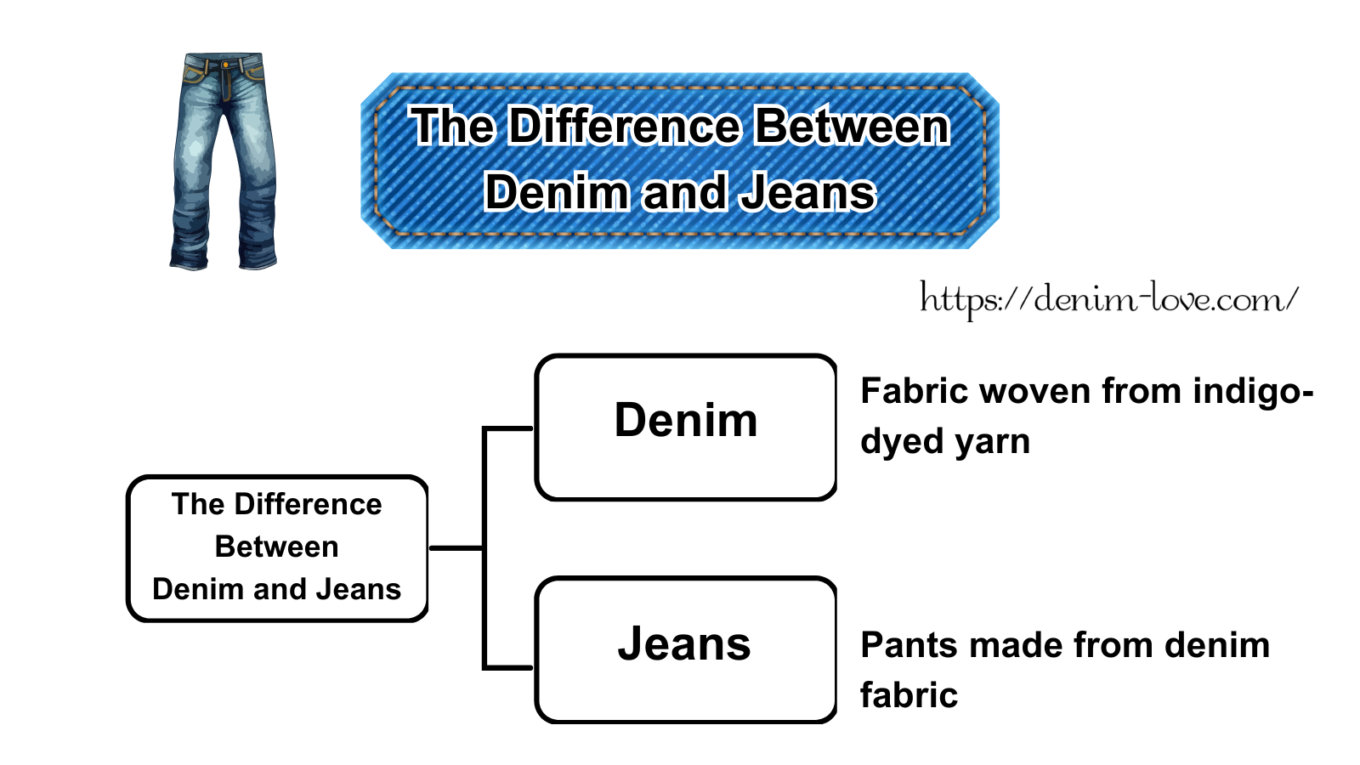
Denim is a fabric woven from yarn dyed with indigo. Jeans are pants made from denim (fabric).

Simply put, denim is the fabric, and jeans are the pants made from that fabric.
In reality, there is no clear distinction, and some people refer to jeans—which are pants—as denim.
| Features | |
|---|---|
| Denim | Fabric woven from indigo-dyed yarn |
| Jeans | Pants made from denim fabric |

Denim is a fabric woven from yarn dyed with indigo, while jeans are pants made from denim fabric. This time, I’ll write about the origins of the words “denim” and “jeans.”

Denim is said to derive from the French term “Serge de Nîmes,” referring to the serge fabric from the Nîmes region.
The origin, ‘Serge de Nimes,’ crossed over to the English-speaking world (America), where the pronunciation of ‘de Nimes’ changed.
The pronunciation of “de Nimes” changes to “Denim.”
The term originates from the French Serge de Nîmes, a serge fabric from the Nîmes region.
Products manufactured in the Nîmes region were exported to English-speaking countries (the United States), where the pronunciation of ‘de Nîmes’ changed.
The pronunciation of “de Nime” has changed to “Denim.”
Serge de Nimes → de Nime → Denim
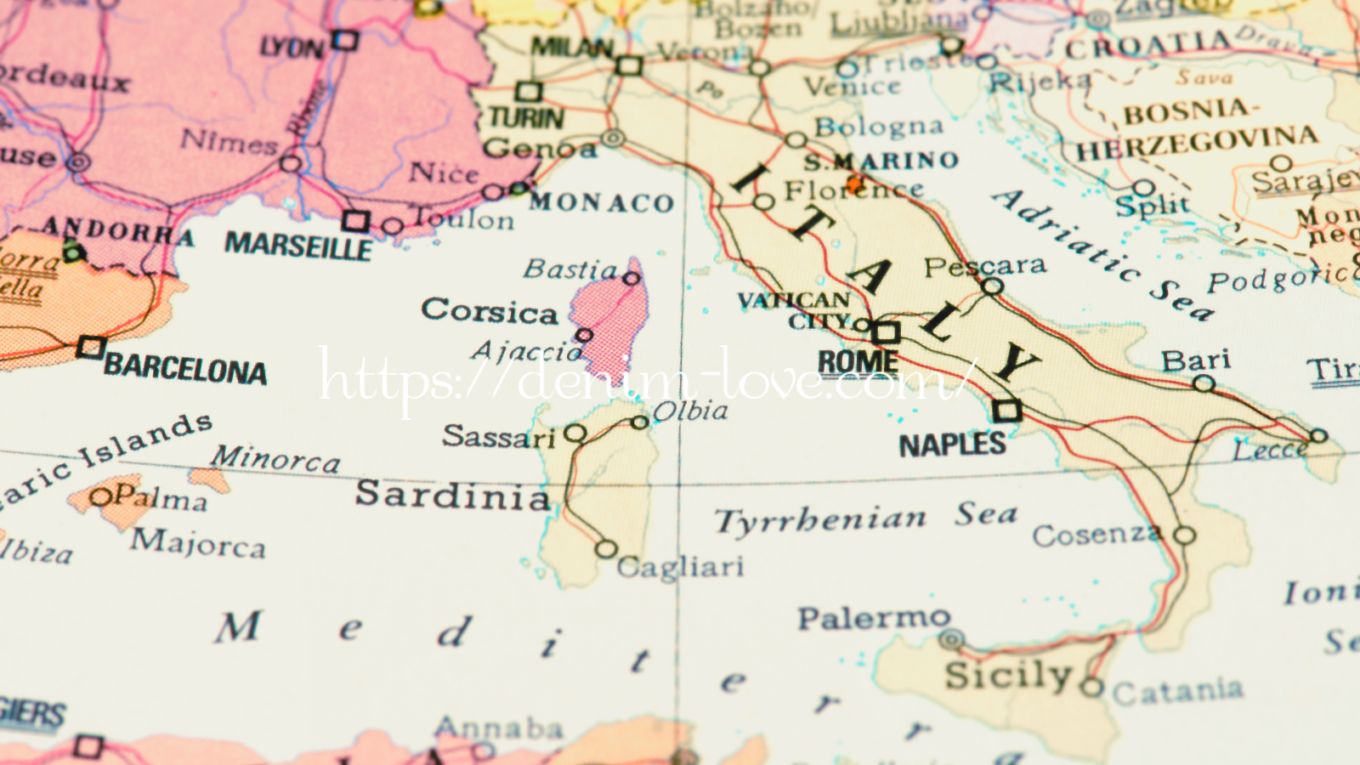
The word “jeans” is said to derive from the Italian city name “Genova.”
The pronunciation of “Genes” (meaning “from Genoa”) and ‘Genoese’ (meaning “people from Genoa”) changes.
“Genes” becomes “Jeans.”
The word originates from the Italian city of ‘Genova’.
The pronunciation of ‘Genes’ (referring to products from Genoa) and ‘Genoese’ (referring to people from Genoa) has changed.
“Genes” becomes “Jeans”
Genoa (Genova)→ Genes → Jeans

There’s not only the terms “denim” and “jeans,” but also the term “G-pan.”
“G-pan” is another name for jeans made from denim fabric.
“G pan” is a Japanese-made English term, so it’s a name that only works in Japan.
Japanese-made English
Wikipedia
Wasei-eigo (Japanese-made English) is a type of Japanese-made loanword used within the Japanese language. It refers to English words or words resembling English (excluding proper nouns and product names) that were created in Japan by Japanese people. In English-speaking countries, they may not be understood because they express something different, or they may be interpreted entirely differently.

“G pan” is said to originate from the term “GI,” referring to American soldiers stationed in Japan after the end of World War II.
The jeans worn by American soldiers, known as ‘GIs,’ are called ‘GI’s pants.’
It’s said that “GI’s pants” was shortened to “G-pan.”
The term originates from the American soldiers stationed in Japan after the end of World War II, known as ‘GI’ (short for ‘GI’).
The jeans worn by American soldiers known as ‘GI’ were called ‘GI’s pants’.
GI pants are abbreviated as “G-pan.”
GI pants → G-pants → G pan
It is said that “G pan” became popular in Japan because it was sold on the black market as surplus military goods.
A black market is an illegally established market.
Black market
Wikipedia
Black market A market operating under its own market economy principles, established illegally outside of price controls when goods are scarce under a price-controlled system. Also sometimes written as “闇市.”

Denim is a fabric woven from yarn dyed with indigo. Jeans are pants made from denim fabric. “G pan” is a Japanese-made English term used only in Japan as an alternative name for jeans.
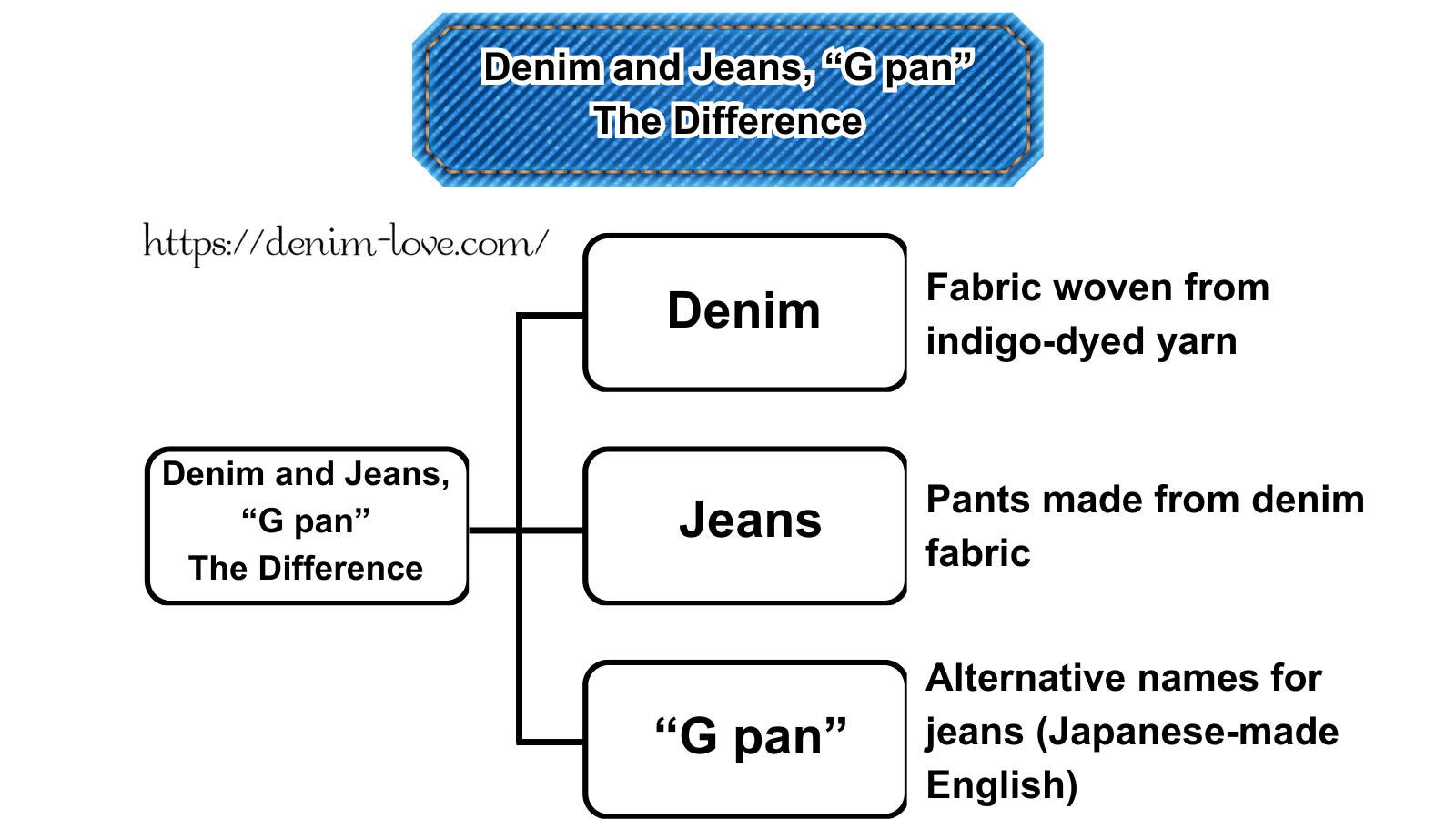
In practice, jeans are often referred to as denim, so I don’t think a strict distinction can be made.
| Features | |
|---|---|
| Denim | Fabric woven from indigo-dyed yarn |
| Jeans | Pants made from denim fabric |
| “G-pan” | Alternative names for jeans (Japanese-made English) |