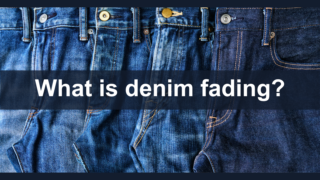
What is denim fading?
denim-love
Denim in everyday life
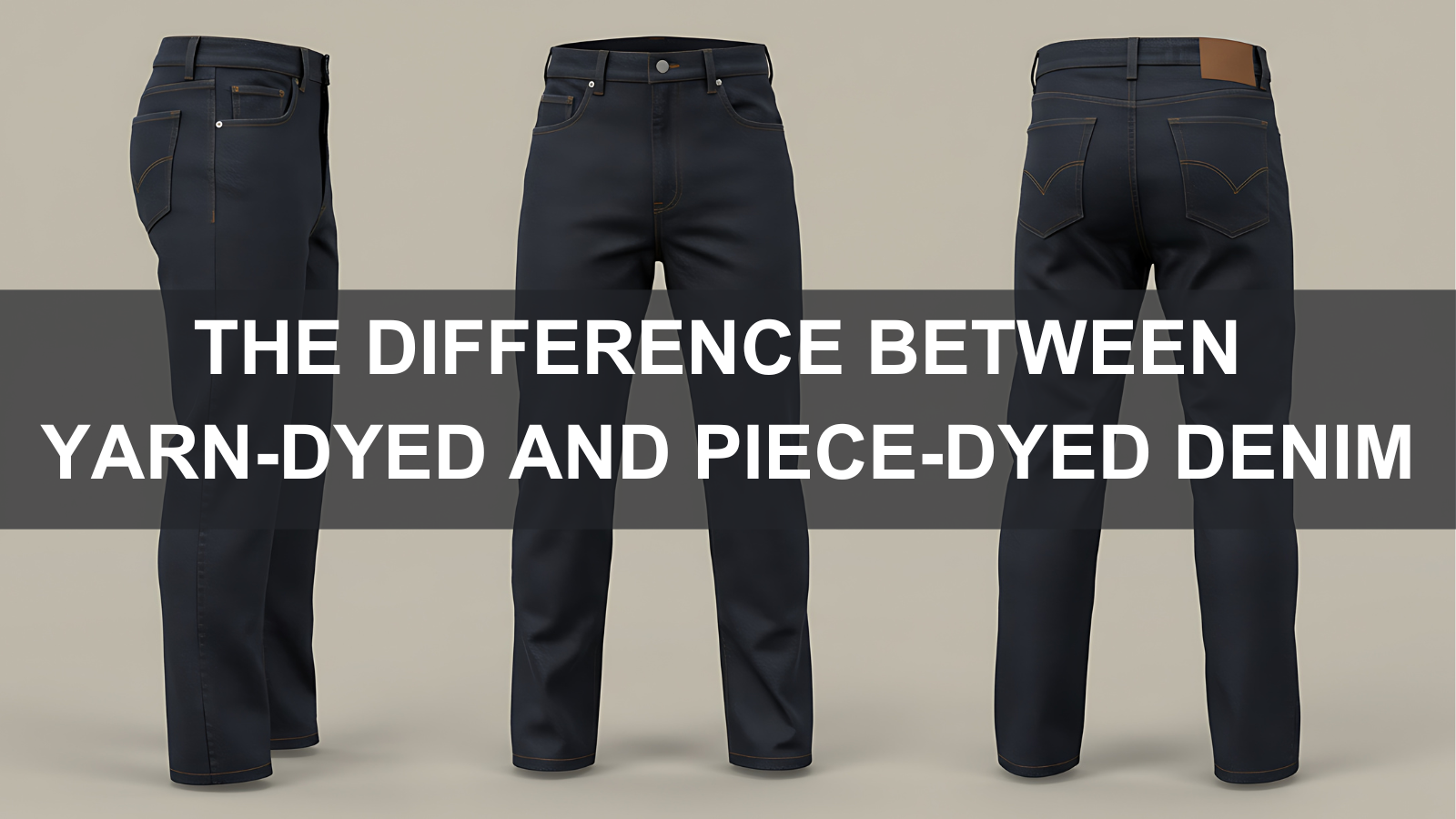
If you’re someone who loves vintage black denim, you’ve probably heard of yarn-dyed and piece-dyed.
The reason is that the texture when black denim fades differs depending on whether it is yarn-dyed or piece-dyed.
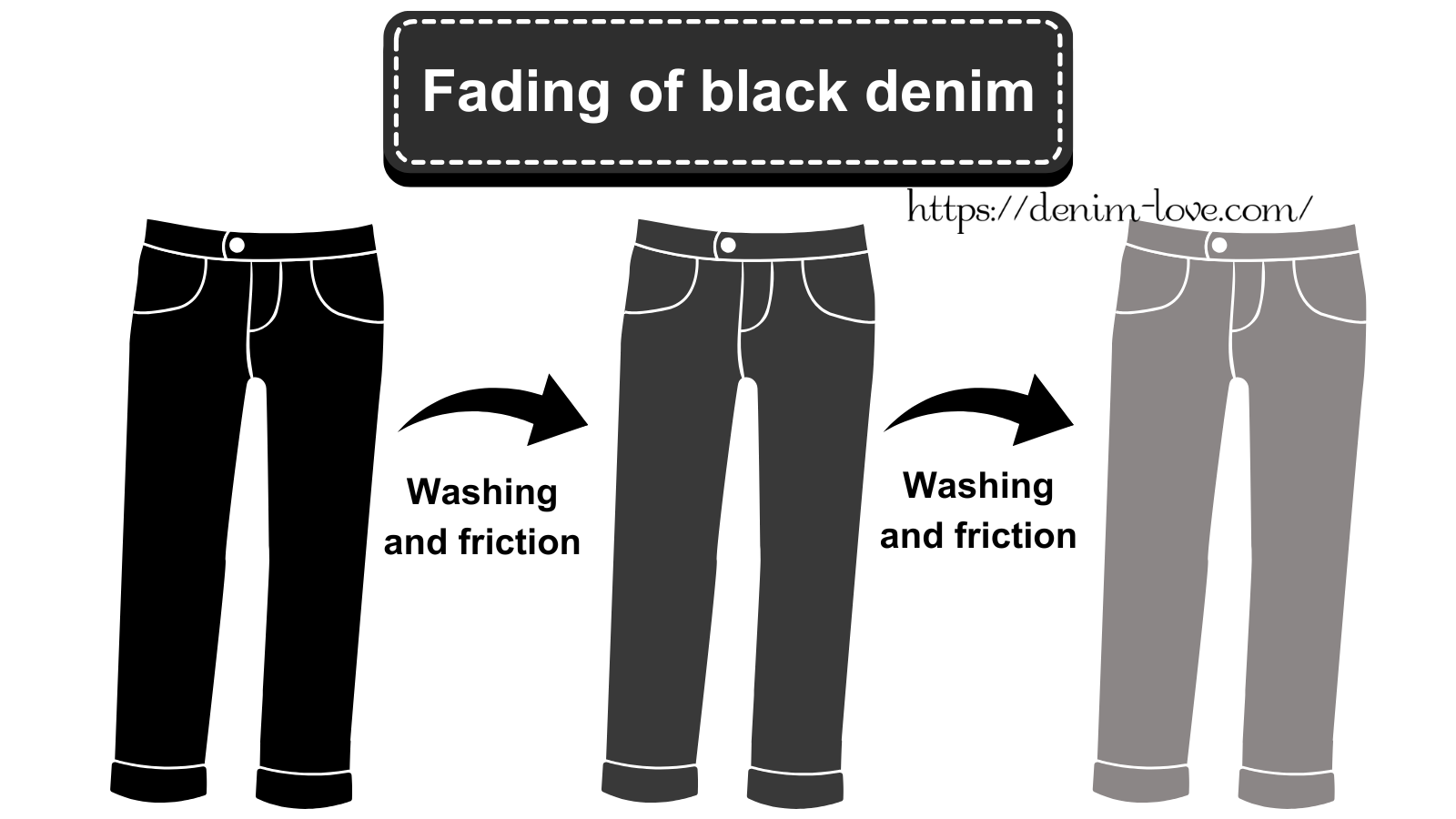
Color fading refers to the gradual lightening of denim’s color due to washing and friction.
The degree of color fading varies from time to time, and the texture also differs depending on whether the yarn is yarn-dyed or piece-dyed.
This article summarizes the differences between yarn-dyed and piece-dyed.
The following article summarizes color fading, so please refer to it.
While black denim can be either yarn-dyed or piece-dyed, indigo denim is only yarn-dyed, so the concept of yarn-dyed versus piece-dyed does not apply.
* Indigo denim is only available in yarn-dyed fabric.

Yarn-dyed refers to the method of dyeing the yarn before weaving the fabric.
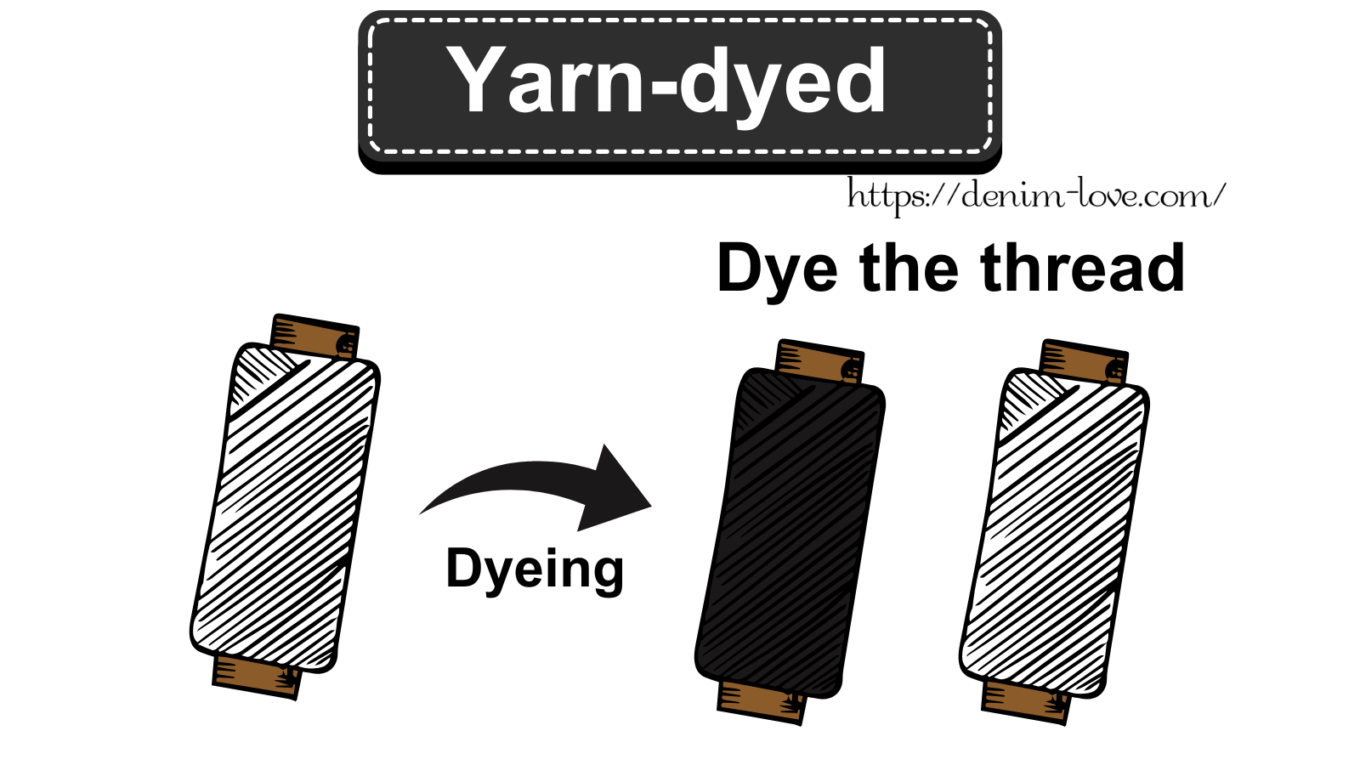
Yarn-dyed involves dyeing unbleached yarn (yarn that has not undergone dyeing processing) black.
To help you better understand the pre-dyeing process, we’ve summarized the steps involved in making Yarn-dyed black jeans in a diagram.
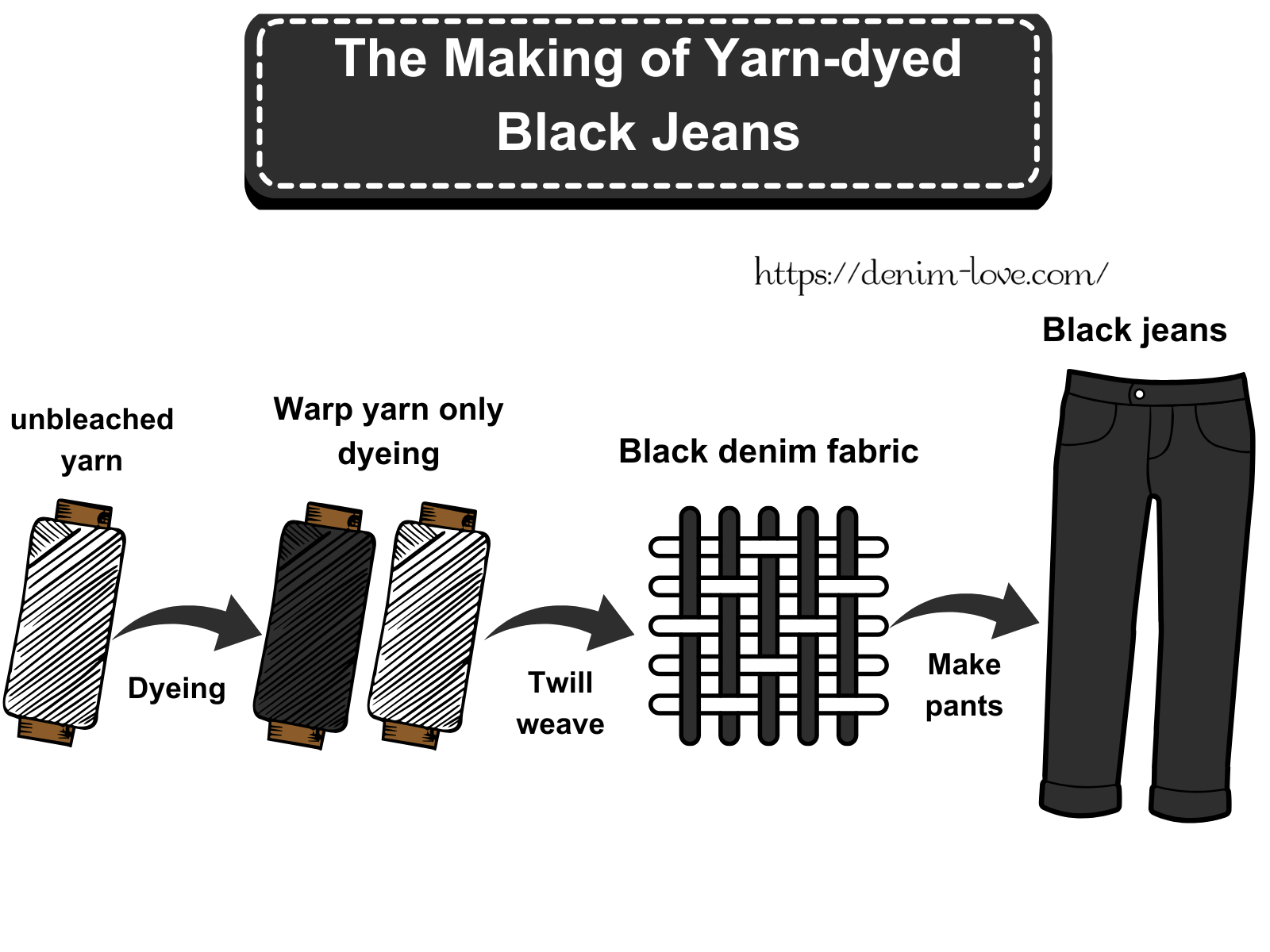
Figure 3 shows the process flow diagram for producing Yarn-dyed black jeans.
We dye the unbleached yarn (yarn that has not undergone dyeing processing) black.
The warp threads are dyed yarn, while the weft threads are undyed yarn (unprocessed yarn). These are woven in a twill weave to create black denim fabric.
* Some black denim fabrics dye both the warp and weft threads.
Using this black denim fabric to make pants will result in black jeans.
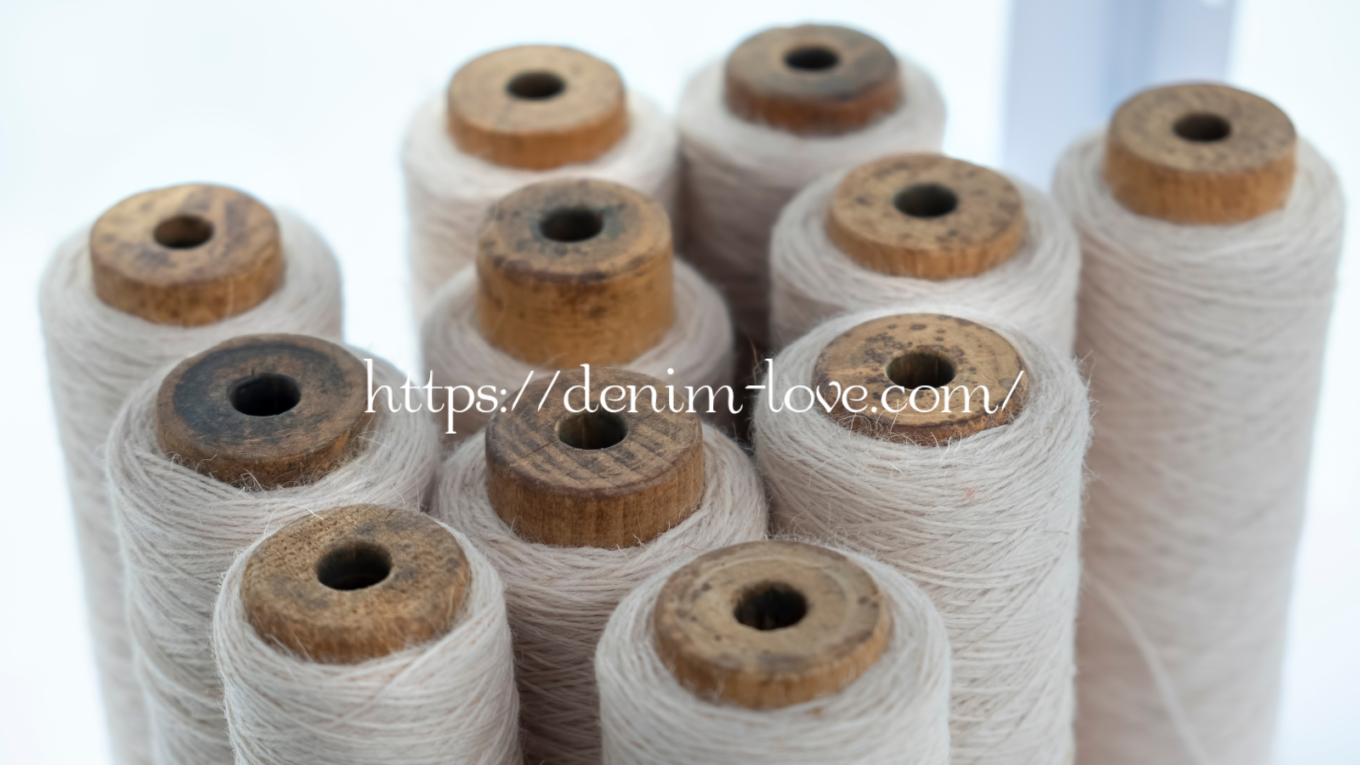
Prepare unbleached yarn (yarn that has not undergone dyeing processing).
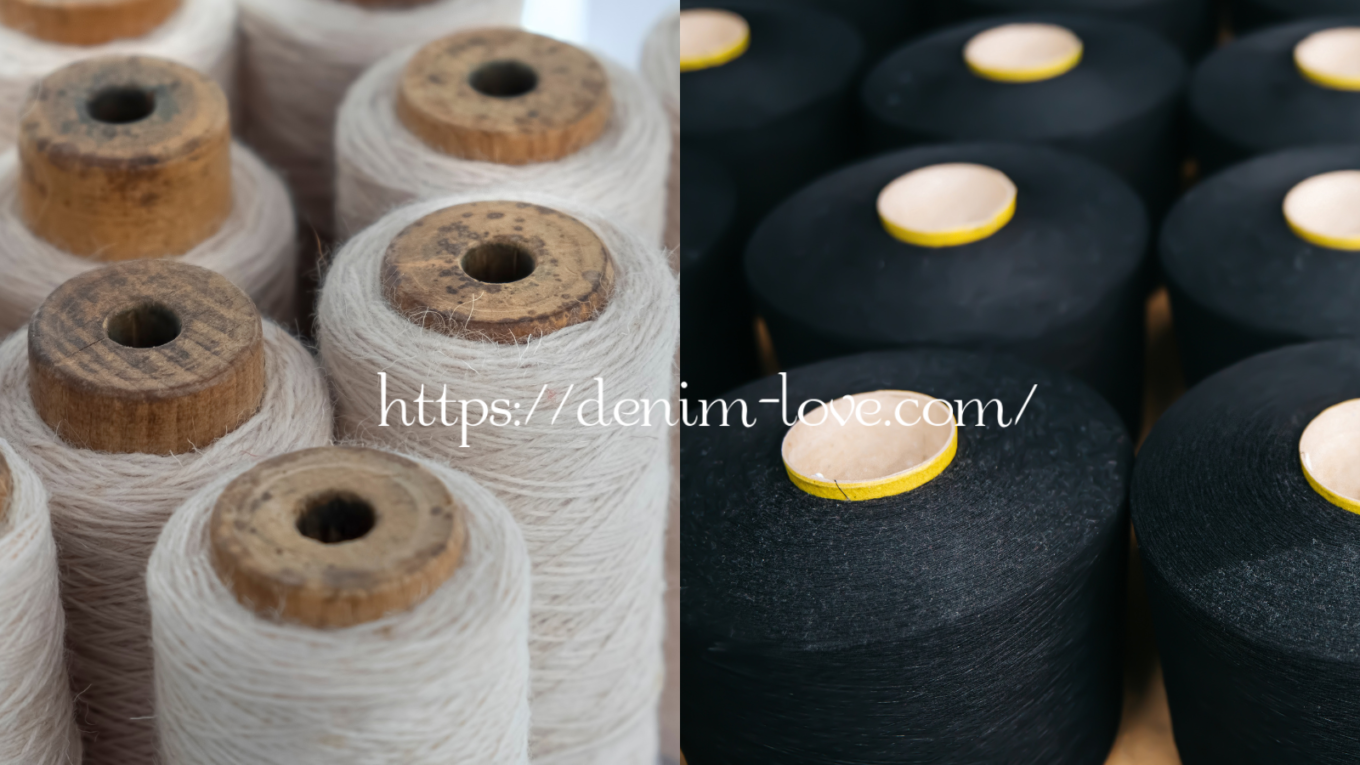
Dyeing the unbleached yarn (yarn that has not undergone dyeing or finishing) to be used as warp threads black

The warp threads are dyed black, while the weft threads are undyed (unprocessed) yarns. These are woven in a twill weave to create black denim fabric.
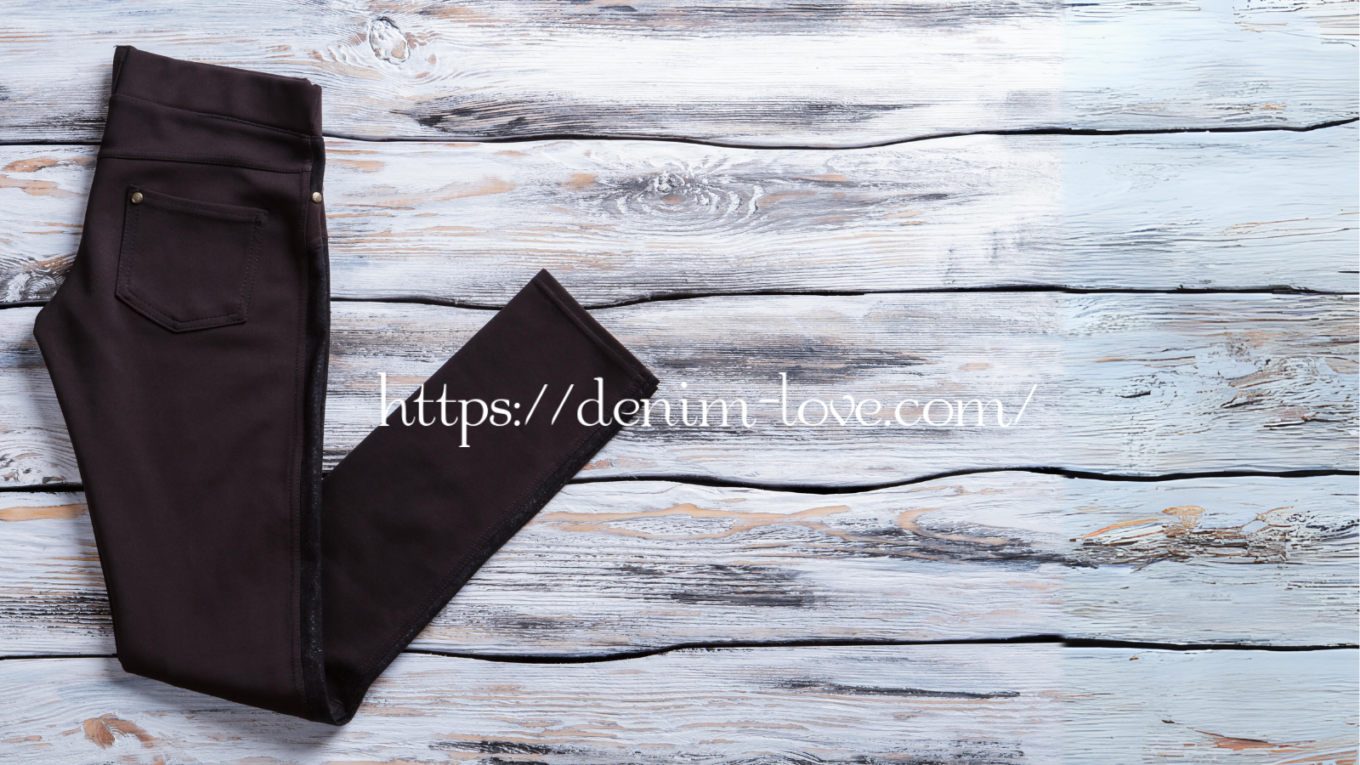
Using black denim fabric to make pants results in black jeans.
The key point of Yarn-dyed is dyeing the yarn.
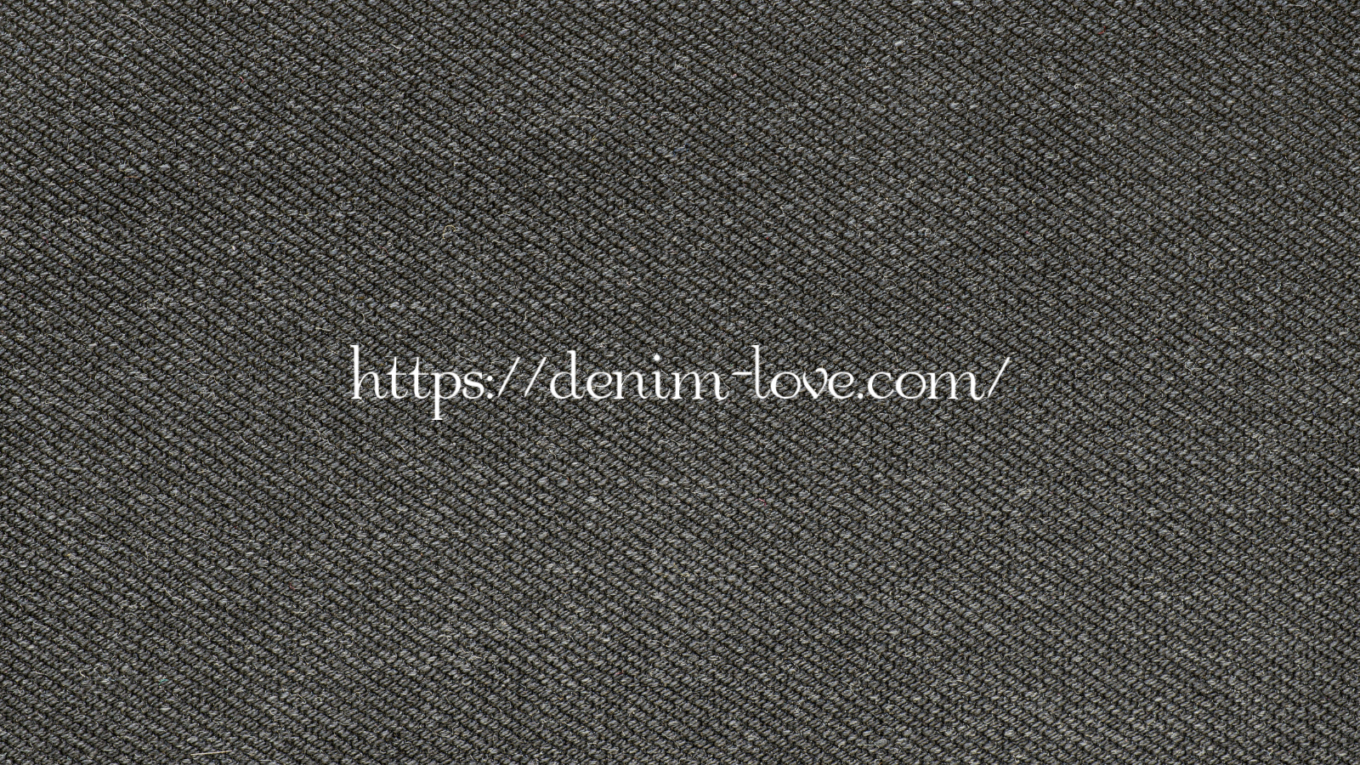
Yarn-dyed fabrics have these characteristics.
Yarn-dyed fabrics also have disadvantages.
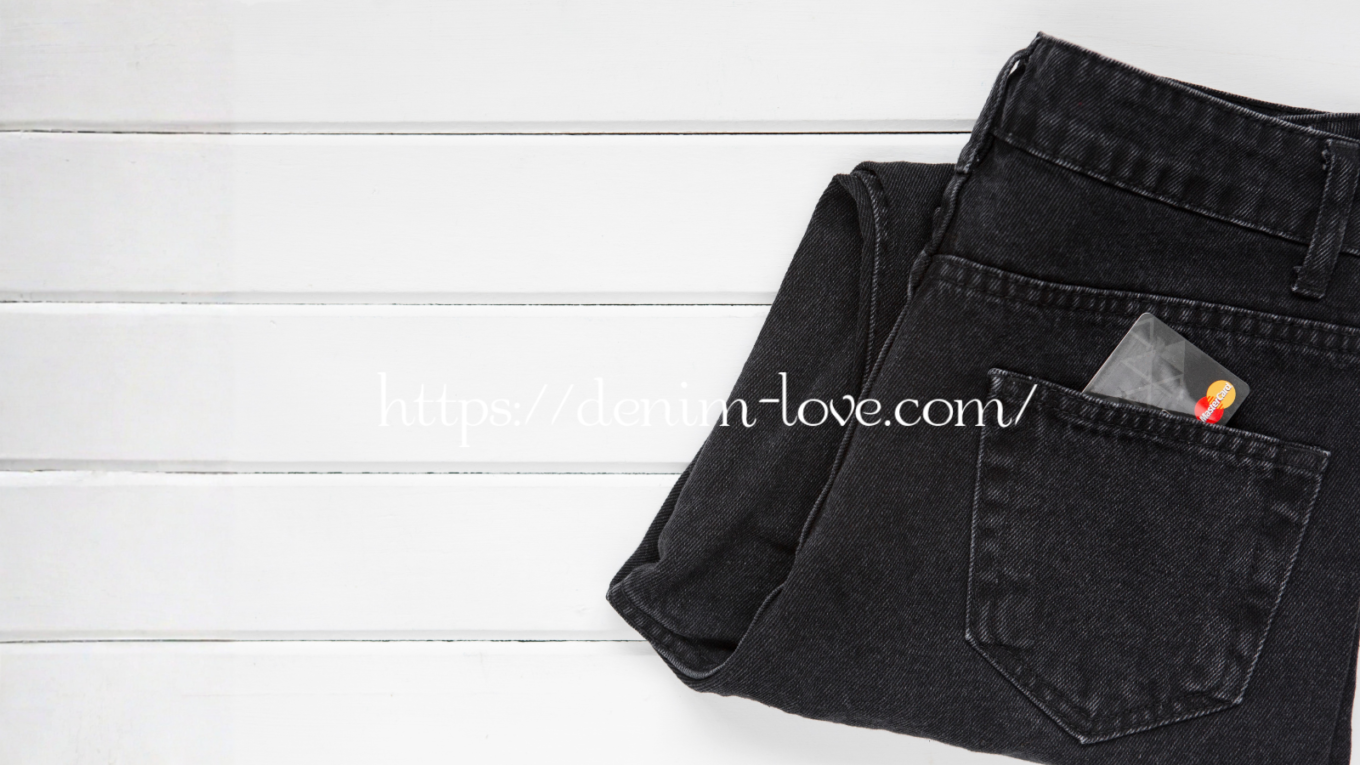
Piece-dyed refers to the process of dyeing fabric that has not yet been colored.

Piece-dyed refers to the process of dyeing fabric that has not yet been colored.
To help you better understand post-dyeing, we’ve summarized the process for creating Piece-dyed black jeans in a diagram.
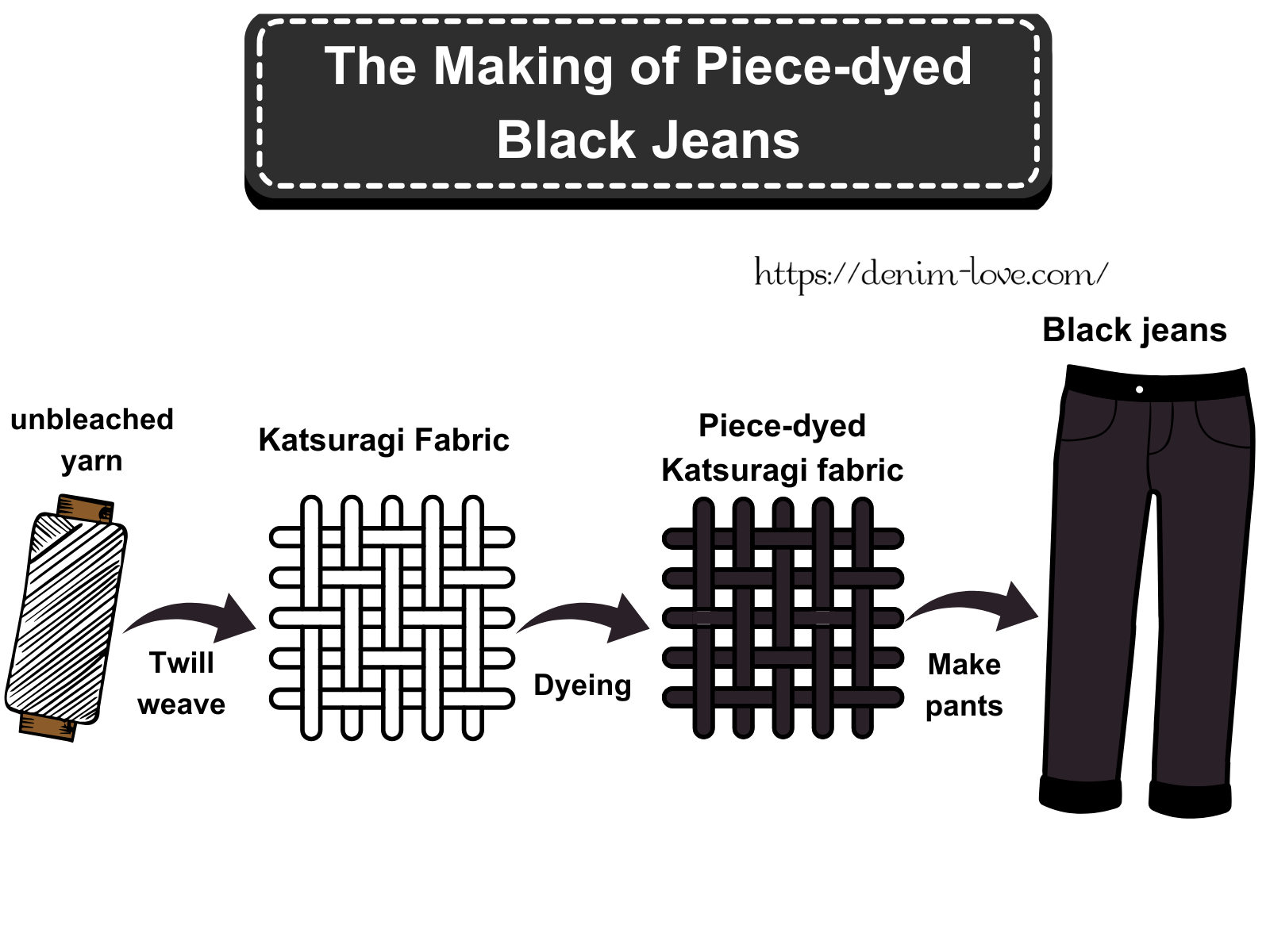
Figure 5 shows the process flow diagram for producing Piece-dyed jeans.
Weaving with unbleached yarn (unprocessed yarn) creates Katsuragi fabric.
Dyeing this fabric black produces black denim fabric.
Using fabric dyed black to make pants results in black jeans.
Prepare unbleached yarn (yarn that has not undergone dyeing processing).
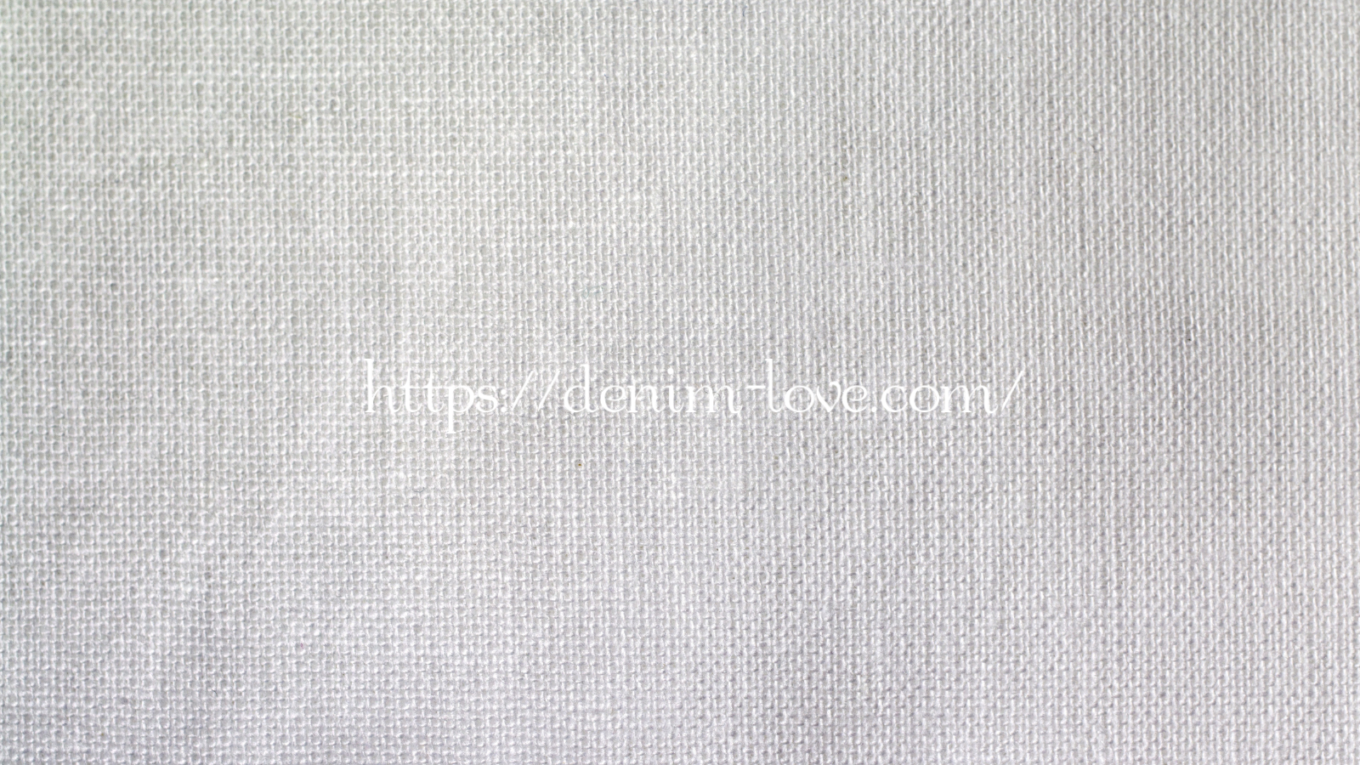
Weave twill fabric using unbleached yarn (unprocessed yarn) to create Katsuragi cloth.
Dyeing the finished Katsuragi fabric
Make pants from dyed Katsuragi fabric, and you’ve got black jeans.
The key point of Piece-dyed is dyeing the fabric.

Piece-dyed has these characteristics.
Piece-dyed fabrics also have disadvantages.
The differences between Yarn-dyed and Piece-dyed fabrics are summarized in diagrams and tables.
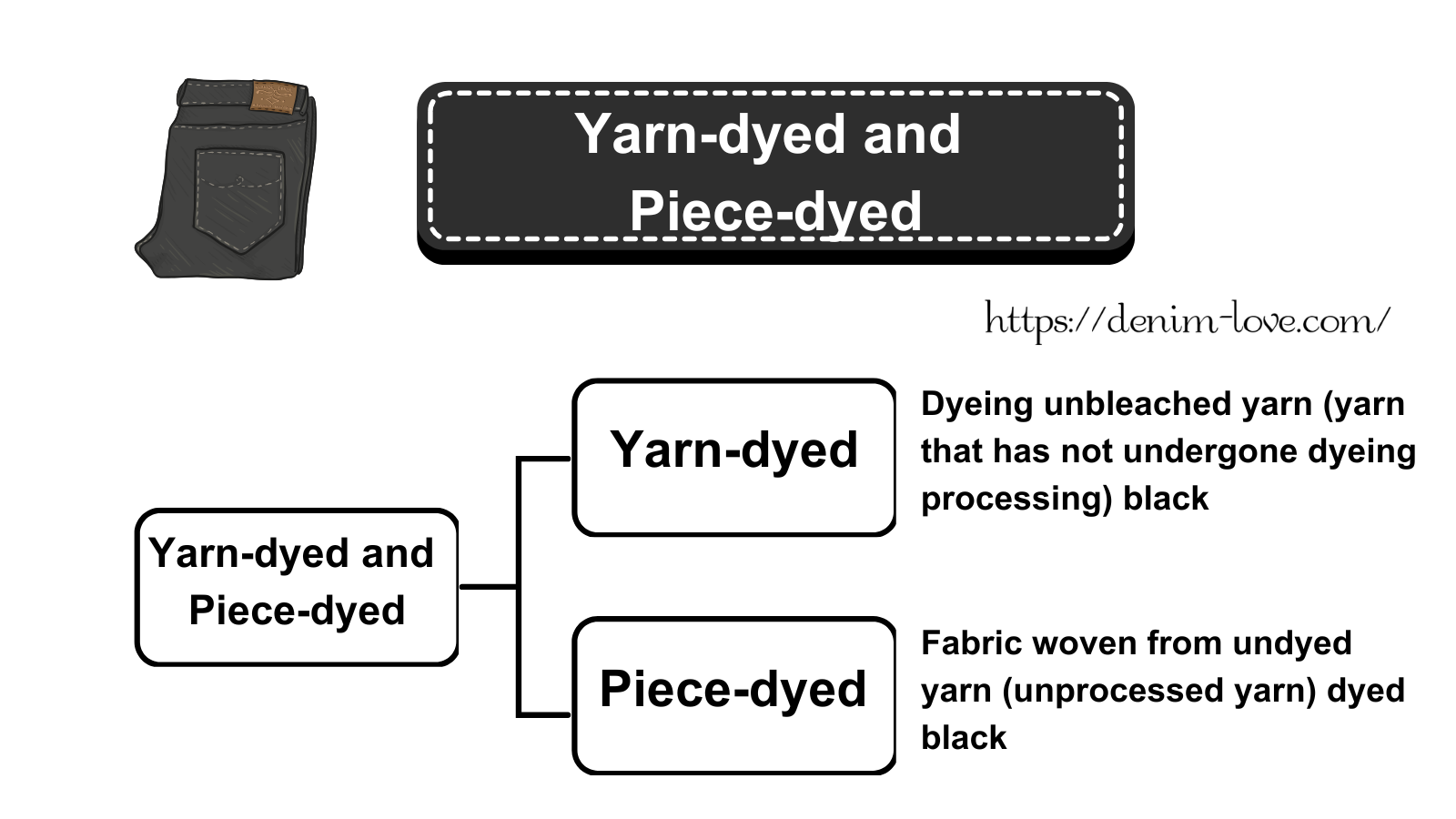
Yarn-dyed involves dyeing unbleached yarn (yarn that has not undergone dyeing processing) black.
Piece-dyed involves dyeing the fabric woven from unbleached yarn (yarn that has not undergone dyeing processing) black.
| Category | Dyeing Method | Dyeing Method (Illustration) | Features | Bad traits |
|---|---|---|---|---|
| Yarn-dyed | Dyeing unbleached yarn (yarn that has not undergone dyeing processing) black | 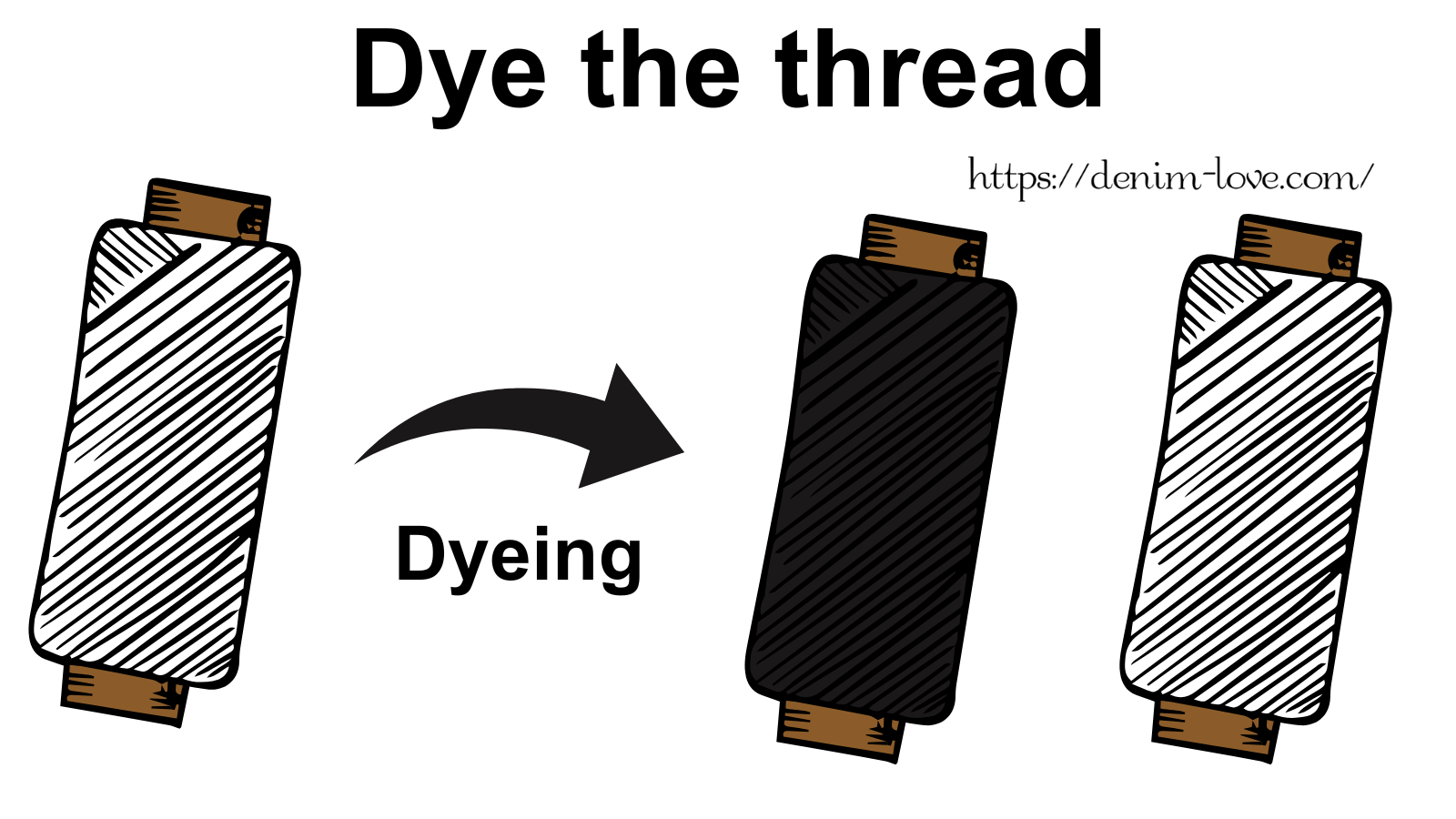 | The yarn is thoroughly dyed all the way to its core, enabling it to produce deep, rich colors. Resistant to fading, so it won’t bleed color even after repeated washing. The color fades relatively slowly and evenly, developing a unique abrasion and texture with repeated washing. | It takes time to It is costly because it uses a large amount of dye. thorough dyeing all the way through the fibers. |
| Piece-dyed | Fabric woven from undyed yarn (unprocessed yarn) dyed black | 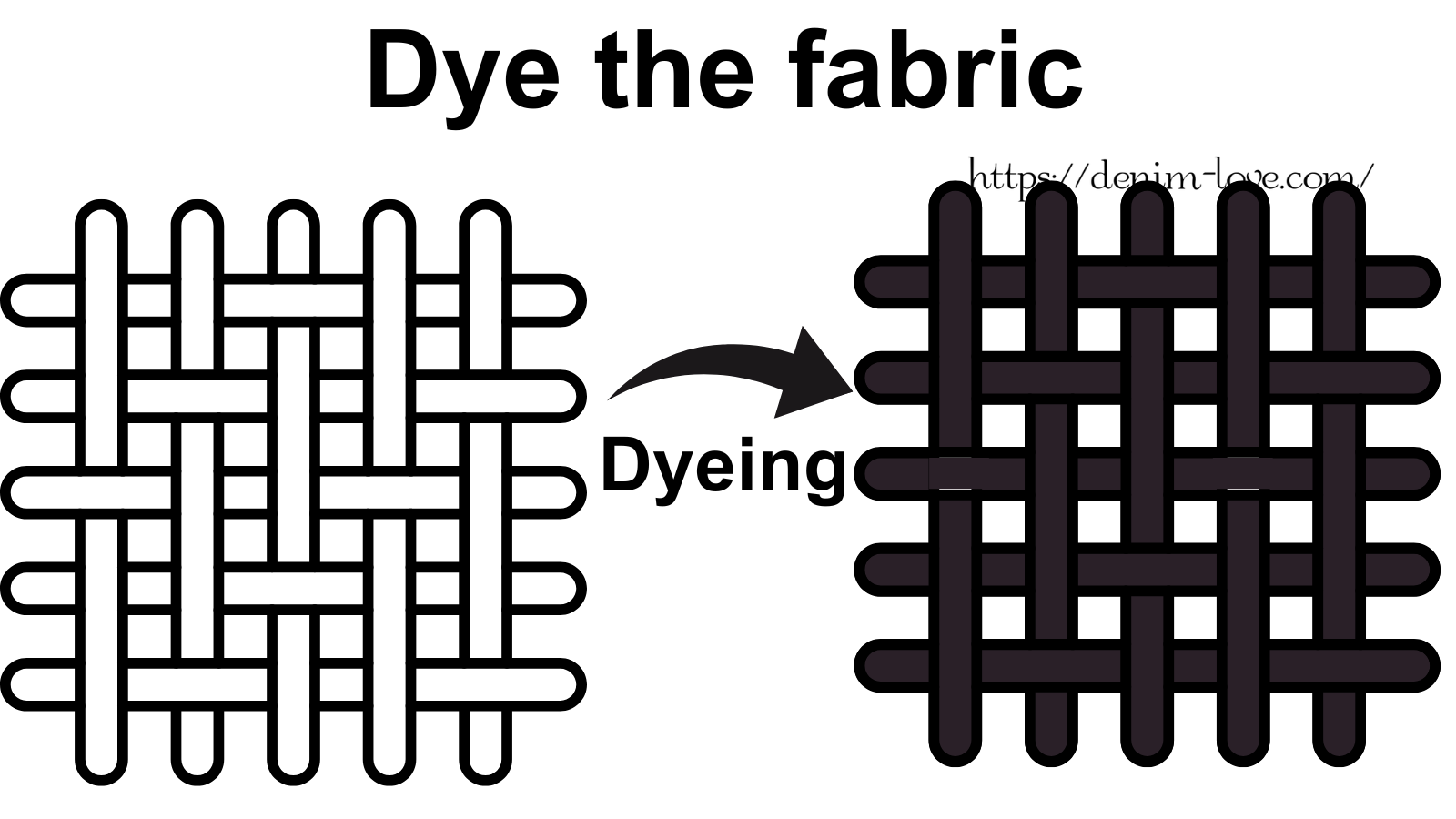 | It can be mass-produced at low cost. The dye adheres to the surface of the fabric, resulting in vivid colors. Flexible and easy to change designs such as patterns and colors. | Since only the surface of the fabric is dyed, deep colors cannot be achieved. It is also prone to fading due to washing and friction. Piece-dyed fabrics are not as high quality as Yarn-dyed fabrics. |