
The Birth of Jeans
denim-love
Denim in everyday life
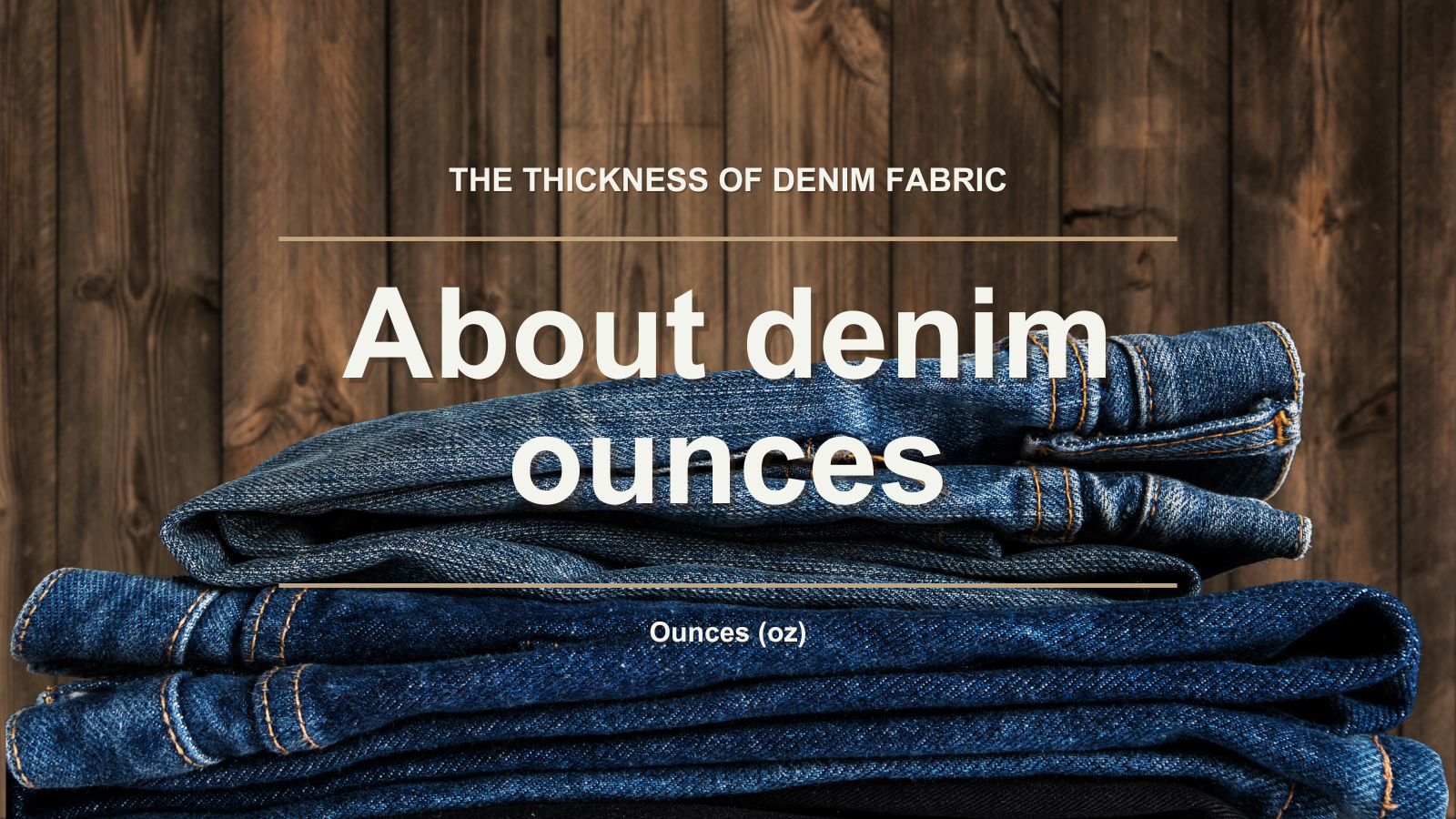
An ‘ounce (oz)’ is a unit of weight.
“oz” is an abbreviation for “ounce.”

The reason it’s unfamiliar in Japan is because it’s a unit of weight used in the British Isles.
Since jeans originated in America, the unit ‘ounce (oz)’ is used for jeans.
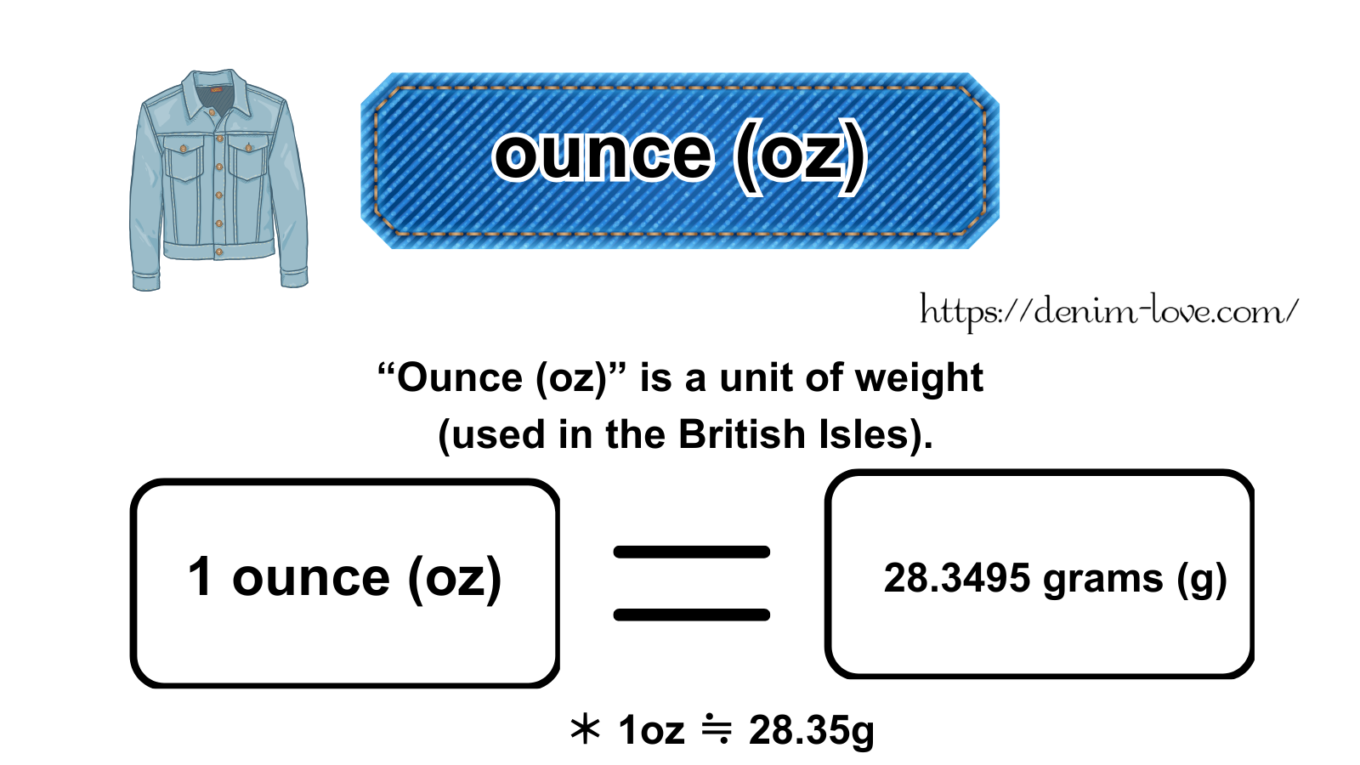
The ‘ounce (oz)’ is a unit used in the UK and other English-speaking countries, and it’s hard for us Japanese to grasp how much weight that actually is.
So, converting ‘ounce (oz)’ to the ‘gram (g)’ we use gives us ‘1 ounce (oz) 🟰 28.3495 grams (g)’.
On this site, we round the third decimal place to ‘1 ounce (oz) 🟰 28.35 grams (g)’.

An ‘ounce (oz)’ is a unit of weight.
However, ‘oz’ in denim does not refer to weight.
In denim, ‘oz’ is a unit of measurement indicating the thickness of the fabric.
Generally, the higher the ‘ounce (oz)’ number, the thicker the fabric becomes.
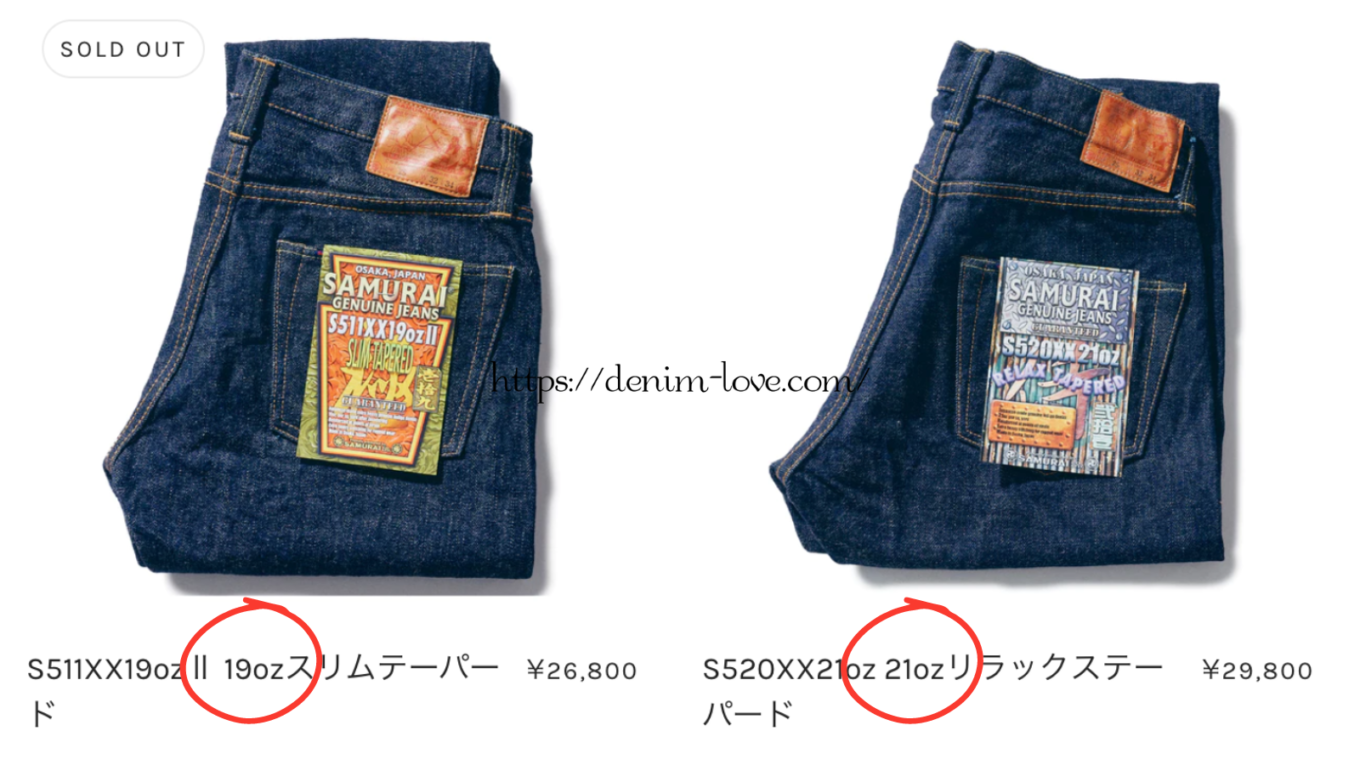
Image 1 is the product description for ‘Samurai Jeans’ sold by ‘Made in Japan Original Jeans Maker from Osaka!’.
The red circle on the product name reads ‘19 oz’ and ‘21 oz’. This indicates the thickness of the denim fabric.
Jeans made from 21-ounce denim are thicker than those made from 19-ounce denim.
Since standard denim is 13 ounces, you can think of 19 ounces as thick jeans.
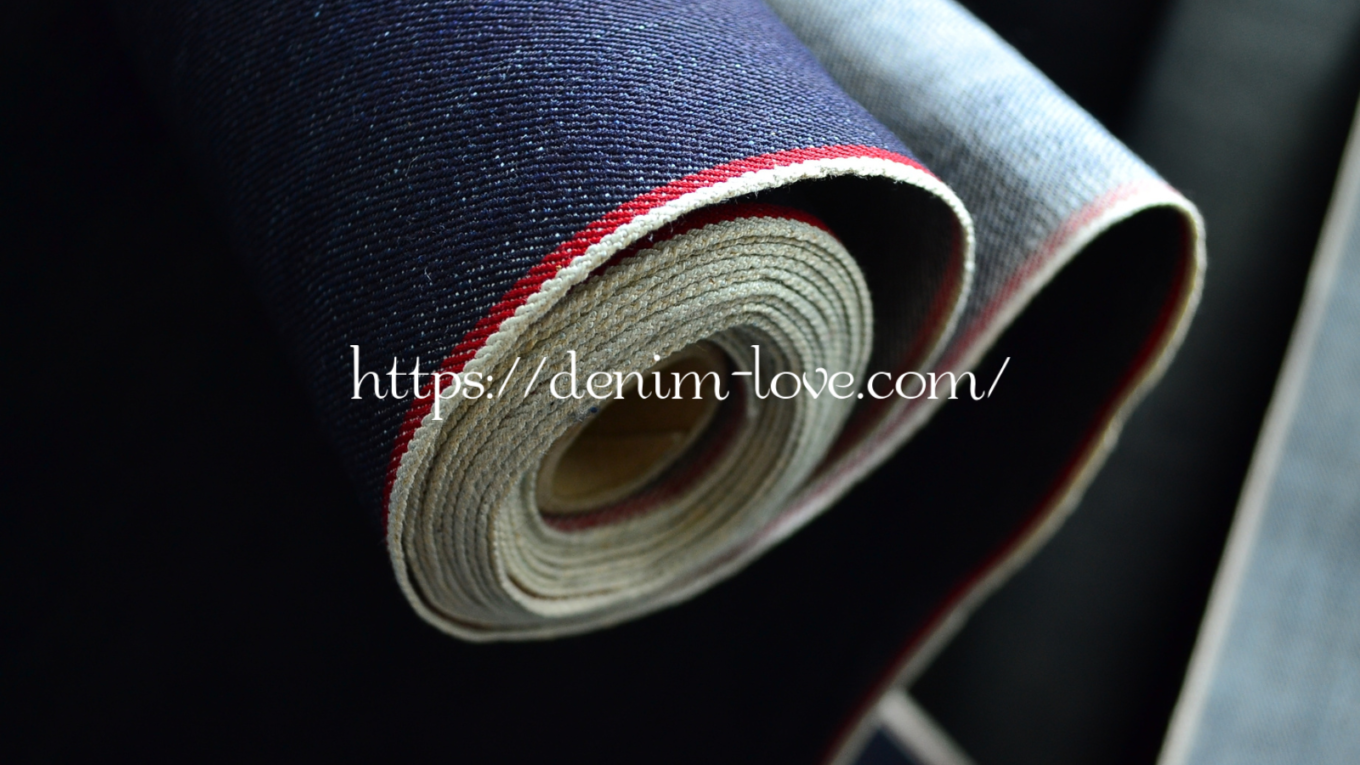
In denim, ‘oz’ refers to the thickness of the fabric, but it has a specific definition.
Denim’s ‘oz’ refers to the weight of the fabric per ‘square yard (yd²).’
The yard (yd) is a unit of length used in the British Isles.
“yd” is an abbreviation for “yard.”
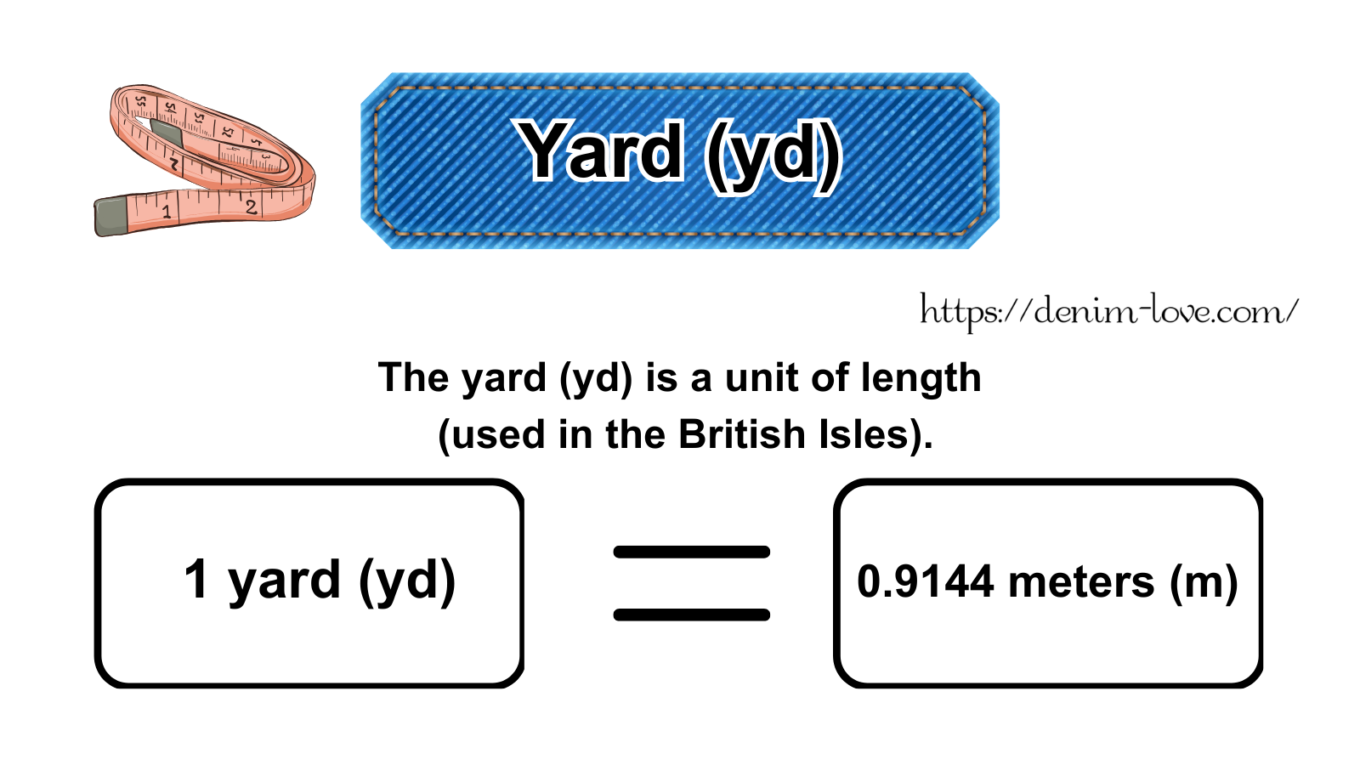
1 yard (yd) is 0.9144 meters (m).
The weight of fabric per square yard (yd²) is difficult to understand because it’s a unit used in the British Isles.
We will convert it to the unit we are familiar with, the ‘meter (m)’.
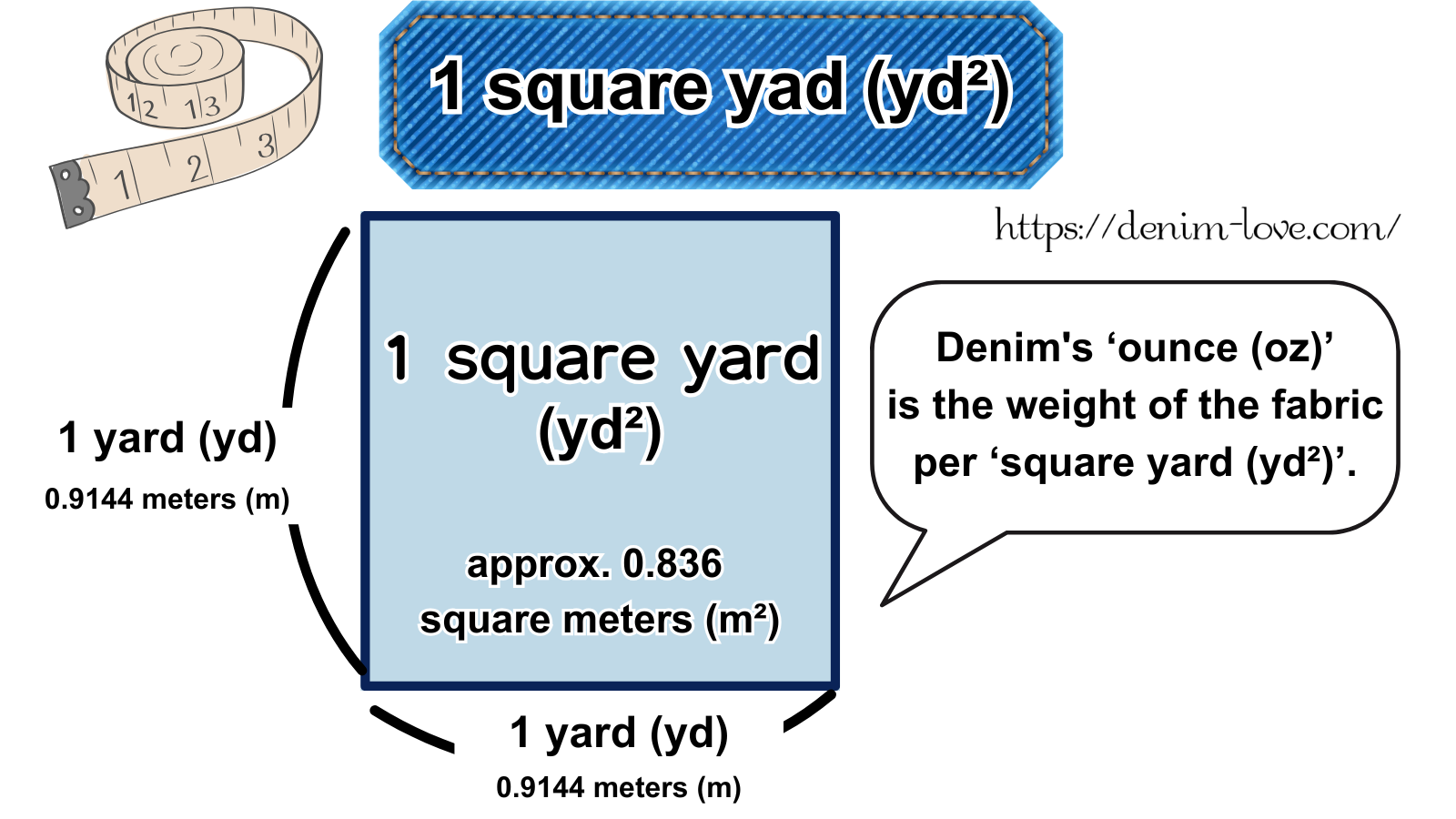
1 square yard (yd²) is 1 yard (yd) by one yard (yd).
Since 1 yard (yd) 🟰 0.9144 meters (m), we will convert the ‘yard (yd)’ in the calculation formula to ‘meter (m)’.
1 yard (yd) ✖️ 1 yard (yd) equals 0.9144 meters (m) ✖️ 0.9144 meters (m).
『0.9144 meters (m)』✖️『0.9144 meters (m)』🟰『0.083612… square meters (㎡)』
1 square yard (yd²) is approx.0.836 square meters (m²).
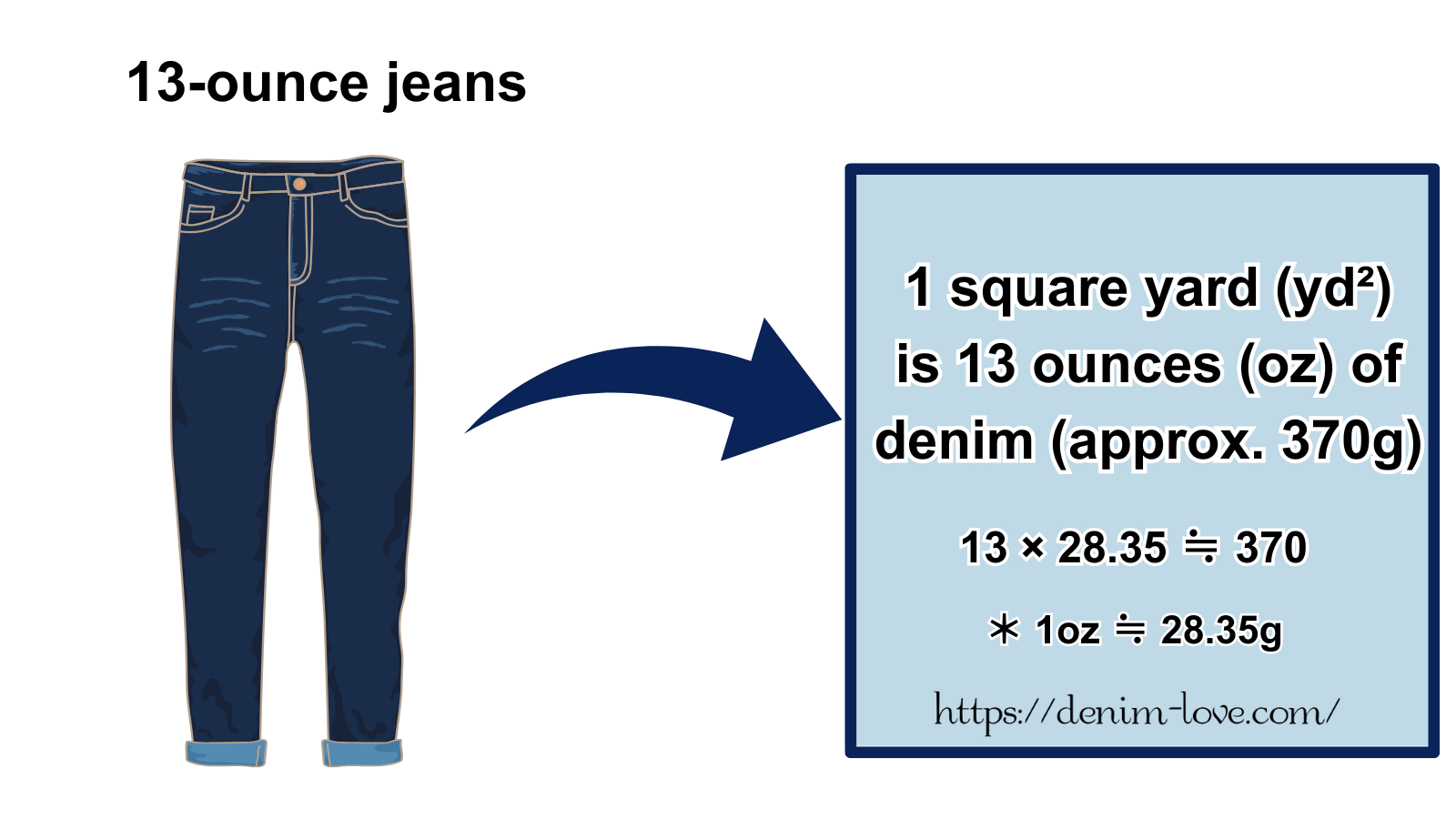
For example, let’s explain using “13 ounces (oz)”.
This is because the standard weight for jeans is 13 ounces.
Since ‘1 ounce (oz) 🟰 28.35 grams (g)’, the calculation for ‘13 ounces (oz)’ is as follows.
『28.35 grams (g)』✖️13 🟰『368.55 grams (g)』
“13-ounce jeans” refers to jeans made from fabric weighing approx.370 grams per square meter (㎡).

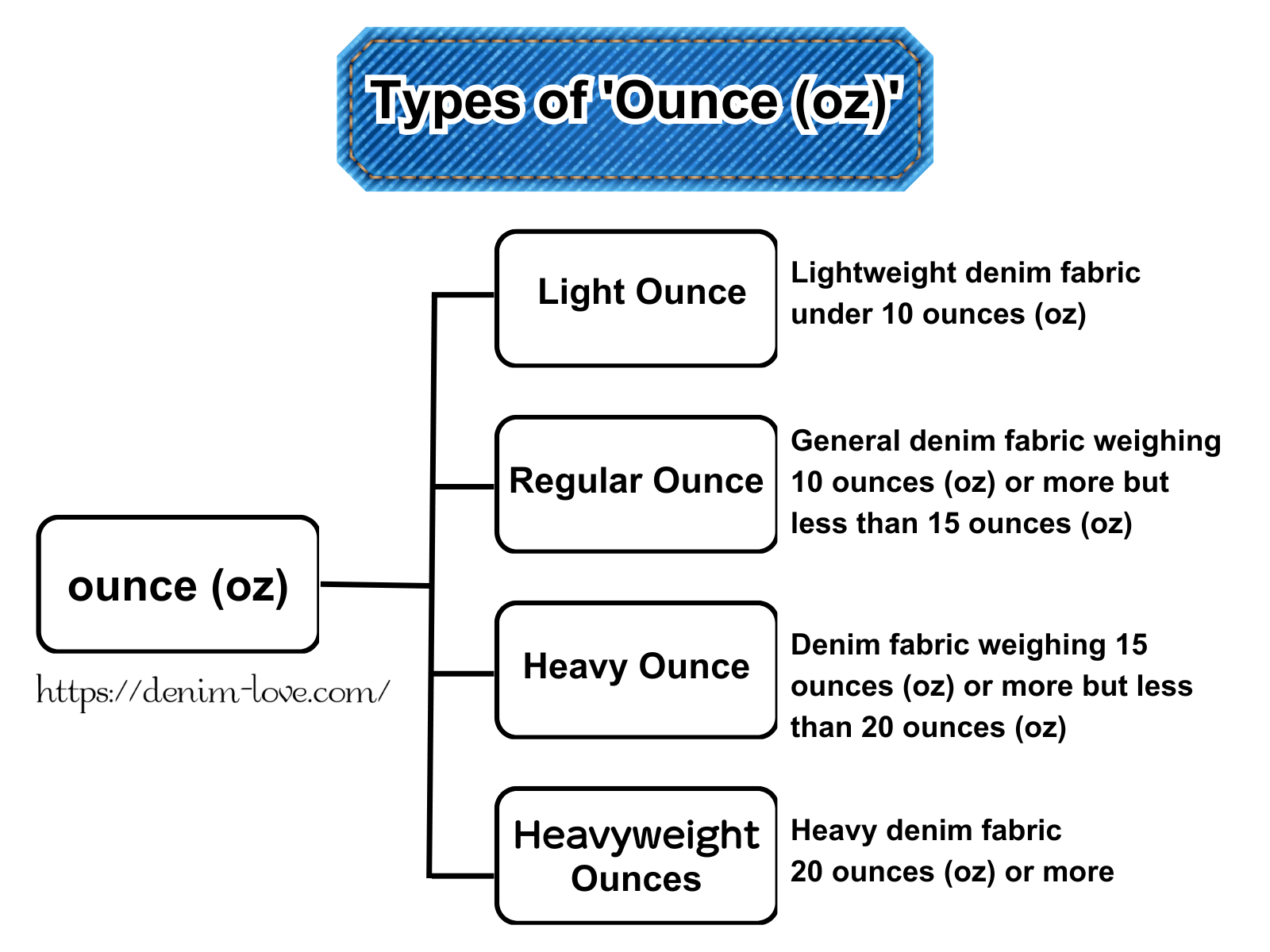
There are four types of ‘oz’ for denim.
There are four types: ‘Light Ounce,’ ‘Regular Ounce,‘ ‘Heavy Ounce,’ and ‘Heavyweight Ounces.’
Regular jeans are made with ‘Regular Ounce’ denim, making them comfortable to wear year-round except during the hottest summer months.
During hot summers, I love wearing lightweight “Light Ounce” jeans when I go outside.
| Types of Ounces (oz) | Features |
|---|---|
| Light Ounce | Lightweight denim fabric under 10 ounces (oz) |
| Regular Ounce | General denim fabric weighing 10 ounces (oz) or more but less than 15 ounces (oz) |
| Heavy Ounce | Denim fabric weighing 15 ounces (oz) or more but less than 20 ounces (oz) |
| Heavyweight Ounces | Heavy denim fabric 20 ounces (oz) or more |

For denim, do we use the weight per square yard (yd²) rather than the fabric area?
Fabric shrinks slightly when washed. Therefore, it is said that the fabric area is not constant.
Like wool, denim fabric also tends to shrink.
The primary reason may well be that in America, the birthplace of jeans, they used ‘ounces (oz)’.
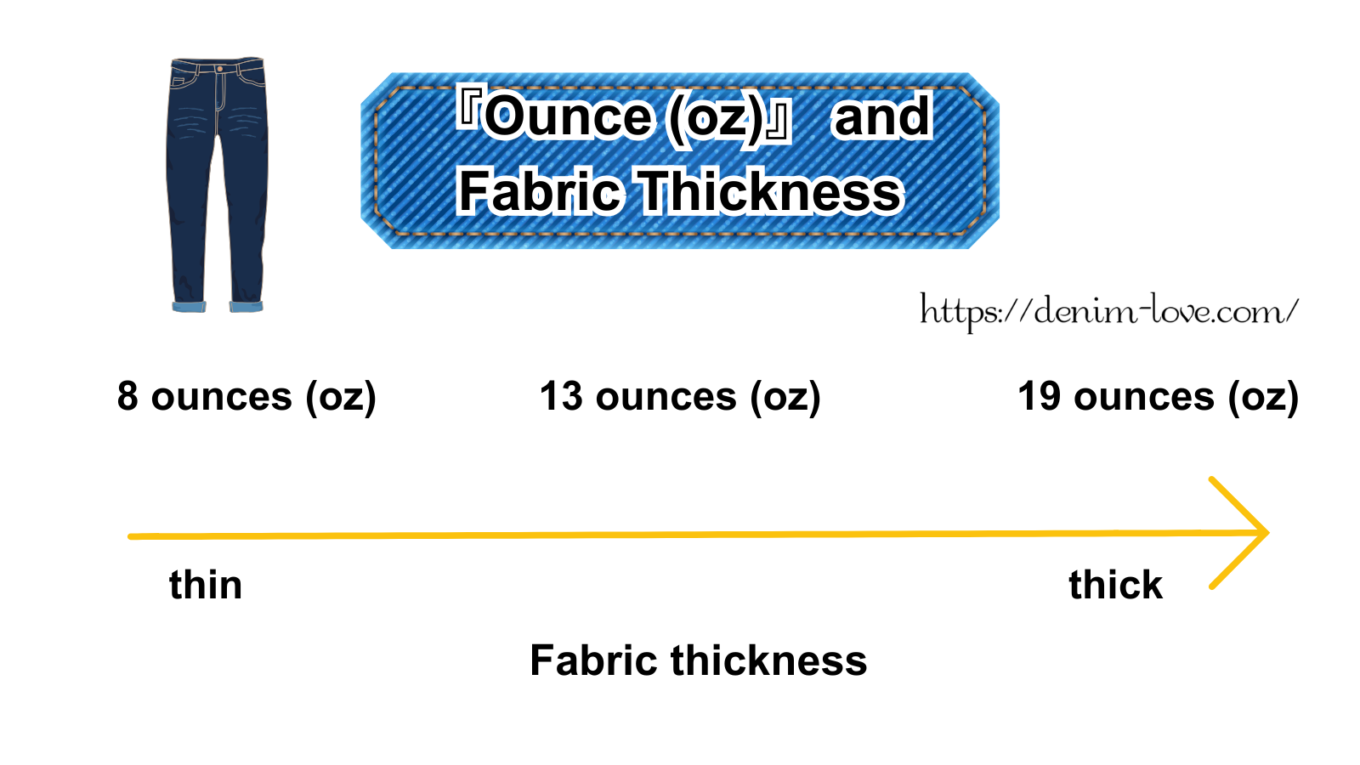
Generally, the higher the ‘ounce (oz)’ number, as shown in Figure 6, the thicker the fabric becomes.
However, this is half right and half wrong.
Because the thicker the yarn in denim fabric, the heavier it becomes, and the higher the density of the denim fabric, the heavier it becomes.
The weight per square yard (yd²) varies depending on the combination of ‘thread thickness’ and ‘fabric density’.
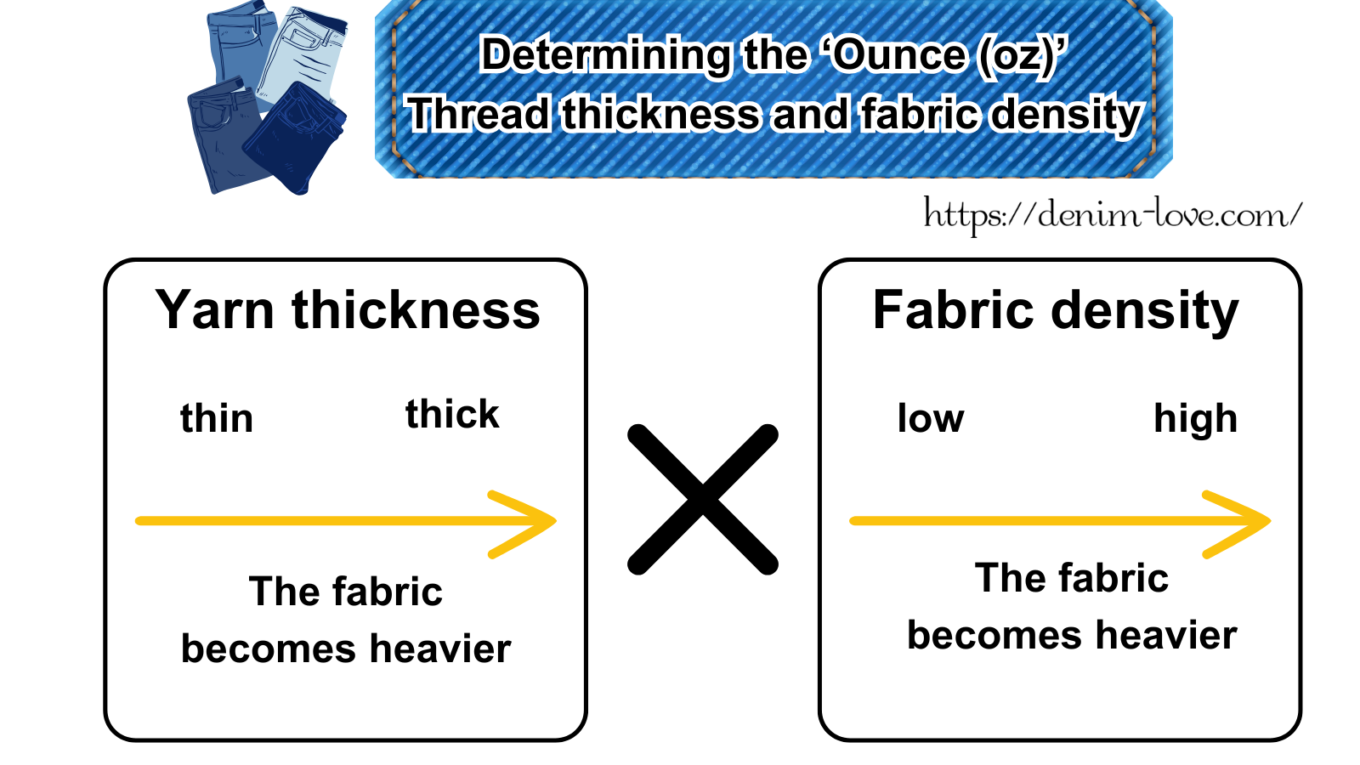
The weight of denim fabric per square yard (yd²) varies depending on the combination of thread thickness and fabric density.
Figure 7 shows the relationship diagram between ‘Yarn Thickness’ and ‘Fabric Density’.
The thickness of the yarn: Thicker yarn increases the yarn’s weight, making the fabric woven from it heavier. The density of the fabric: Higher density results in a finer weave, making the fabric heavier.
The combination of ‘thread thickness’ and ‘fabric density’ creates a variety of fabric patterns.
If the yarn is thin and the fabric density is high, the fabric will be thin yet heavy.
This is why, generally speaking, a higher ‘ounce (oz)’ number does not necessarily mean thicker fabric.
I feel that the higher the ounce number, the thicker the fabric tends to be.
When buying jeans by the ounce, it’s best to see the actual item and check its weight and texture before purchasing.
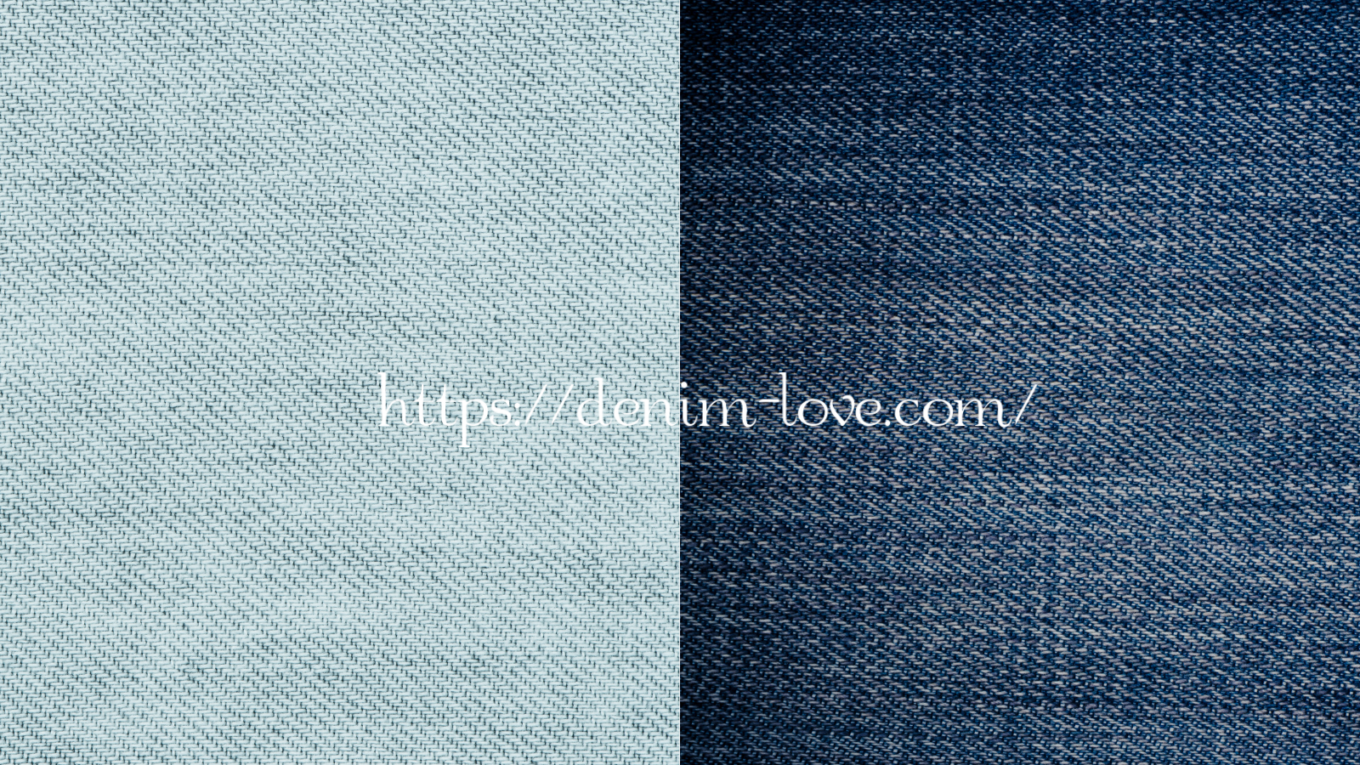
Earlier we discussed the combination of ‘thread thickness’ and ‘fabric density,’ but now we’ll focus on how the ‘fabric density’ affects the feel.
Figure 8 below illustrates low ‘fabric density’ and high ‘fabric density’.
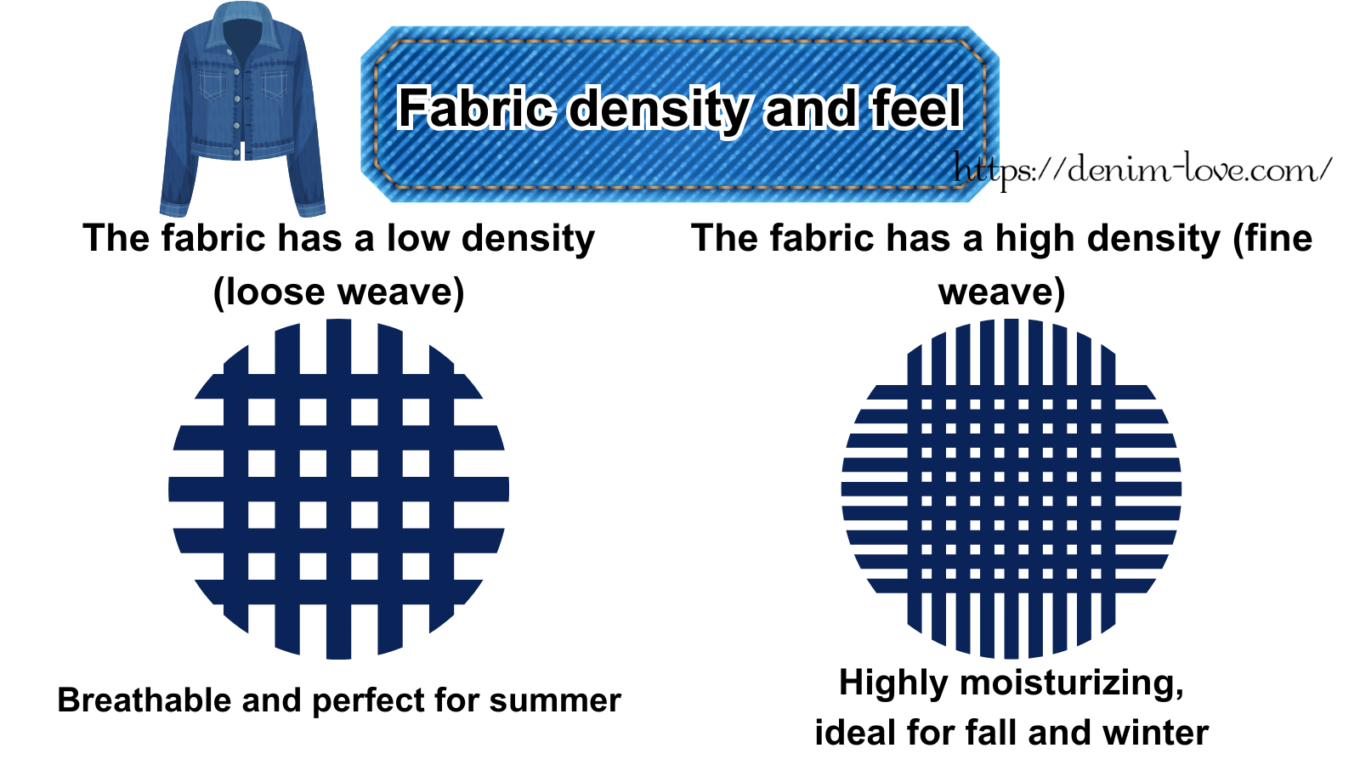
Fabrics with low density have larger gaps between the threads that make up the fabric. This is referred to as having a coarse weave.
Fabrics with low density—characterized by wide gaps and high breathability—allow air to pass through easily, making them ideal for hot summers.
Fabrics with high density have narrow gaps between the threads that make up the fabric. This is described as having a fine weave.
Fabrics with high density—meaning narrow gaps and high moisture retention—retain heat well, making them ideal for cold winters.
| Fabric density | Alternative name | Characteristics |
|---|---|---|
| Low density | Coarse-grained | Highly breathable and perfect for summer |
| High density | fine-grained | Highly moisturizing and ideal for winter |